Thursday, June 11, 2009

Farmers Market In June


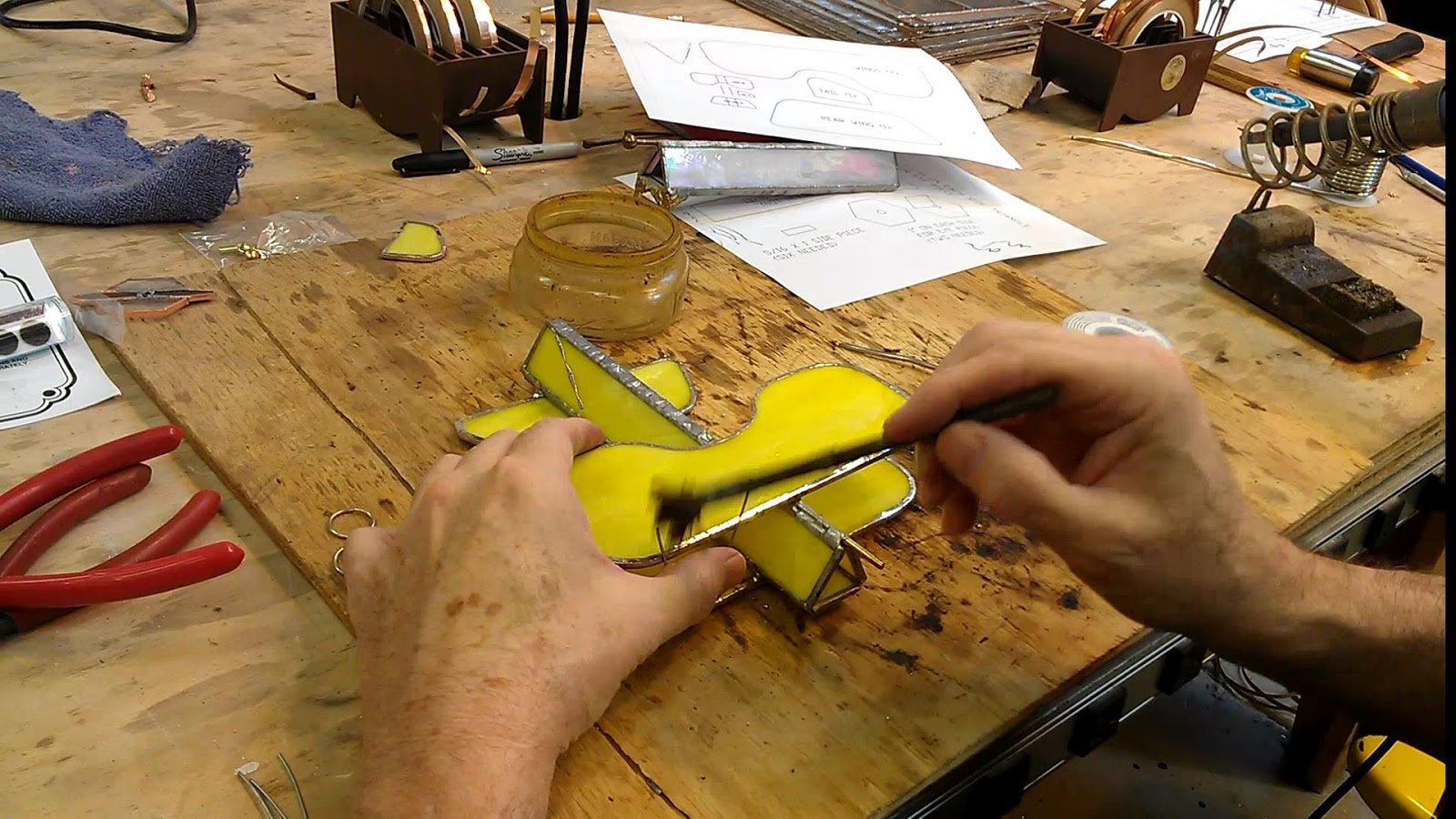
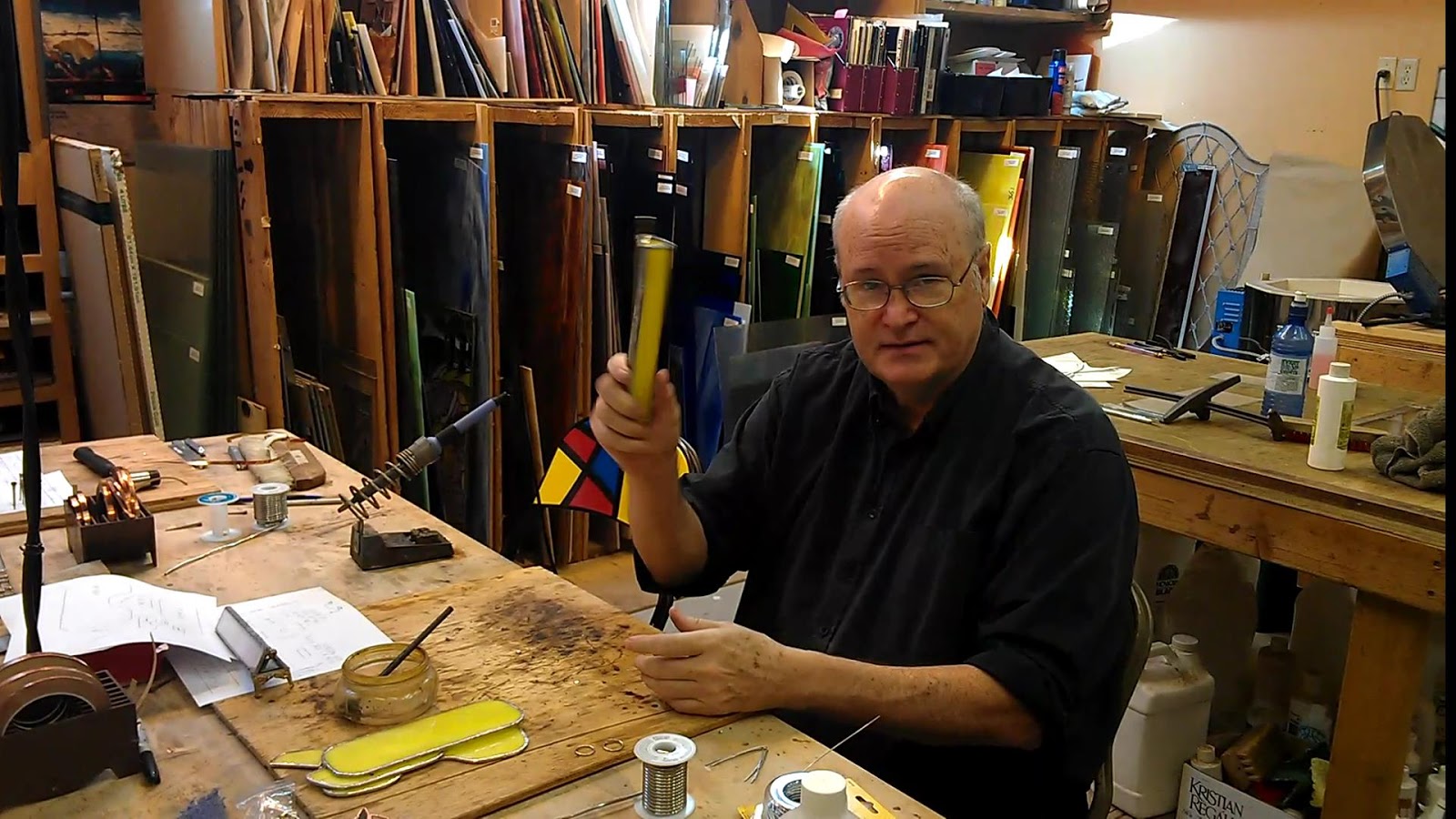
Last weekend we setup at the Provo Farmers Market. We plan to keep going throughout the summer. It was nice to get a chance to talk to people, it wasn't too hard to set up and the weather was nice. A pleasant way to spend a Saturday.

Wednesday, May 27, 2009

There are so many projects to try!


There are just so many stained glass projects to try! I often wonder why I haven't done more. There are just so many different ways to work with glass and techniques to practice and get better at, it's just a lifelong practice to dedicate yourself to. I keep finding more things to try, to perfect. What a joy it is to embark on working on new skills and returning to techniques we've put aside for awhile.

Wednesday, May 06, 2009

We're Working On Sidelites

They really look great. The client has spent some time in Africa and will be going back after getting some Masters classes in. So there is a distinctive African flavor to the windows. Jeanne had fun hand picking the colors and after we got them cut and fit, she swapped out some of the pieces so the windows would be perfect.

I soldered for a few hours today and have to admit that it was pretty fun!

Saturday, May 02, 2009

GLASS show at Terra Nova Gallery


The place is Terra Nova Gallery, the show is called "Glass" and was put together by Andy Kosorok. This is a really good show, lots of different examples of different glass art (we were the "traditional" example) If you love glass, you'll love this show. The Gallery is at 41 West 300 North, Provo, Utah and the glass show runs from May 1 to June 26, 2009 They are open Monday -Friday 10 am to 6 pm. There will be a LIVE Glass Demonstration Friday June 5, from 6 to 9 pm.

Wednesday, April 29, 2009

Jewelry Boxes Make Good Gifts

We stacked up a bunch of Jewelry boxes yesterday when Dallas Golden came over to shot the second video in our project series. He also brought the first draft of the picture frame video. It's very good, just needs to have some sound adjustments. While watching it, I'm amazed that I can see some of the soldering better than in real life. I have to admit that it may be better than our first video. The first took over five years to get complete because we kept having to change people and pick up the project, do a piece and then find someone else. Dallas got this together in less than a month and it looks so good. It's longer than the first video, right at 1 hour.

Saturday, April 25, 2009

When You Don't Get The Job


Okay, some folks are just weird. About two weeks ago, some people called us and made an appointment to come to our studio to talk about a piece of glass. They came and Jeanne and the woman talked about the design they wanted for a stained glass window. They drew a sketch and they picked out all the colors for the window and set them out on a table, ready to cut.

I had a nice time, showing the husband different projects in various stages and telling him about how stained glass was built. So..they left and I drew the design on AutoCAD, sent it to them with a price (around $400). A day or two passed and I called to see when they wanted us to start. Husband was out of town and he'll call when he gets back. A few days go by, I call again. "Oh, I'm not sure what my husband has decided, I'll have him call tonight." We wait. I call mobile phone next day. Husband says we've decide to go a different way. I ask if they've decided against stained glass. "No, but we've decided to go with another company." So I start quizzing the guy because I want to know what lost us the job. I mean we drew drawings immediately to their specifications and were poised to start cutting glass. Maybe it was price..no they are getting the other design done for about $600.

Bottom line, I still don't have a clue why they went with someone else and why they chose to pay more money for a lesser piece of glass. People are really weird. Jeanne says I'm taking this too hard. She points out that we've not gotten jobs before and it just rolled off my back, no big deal. But this time I seem to be taking it to heart. And I guess she's right, but it's just that I can't explain any good reason that these people went with another artist....hmmm

The Chipboard House

We went to meet a client the other day to measure for stained glass. It was a little surprising when we arrived to the home and found a chipboard box. No finishing details yet. So we're a long way from actually being able to measure for windows. At least we're talking to the home owner early in the project.

Friday, April 17, 2009

Elk Window

I've metioned the Elk window we've been working on on facebook. It's really looking good. I think the client will really like the great colors. Jeanne spent a lot of time and care picking the colors so they would be realistic.

Platter For Wedding Reception

We're making some platters so we can make some cupcake stands for Katherine's wedding reception. We thought it would be cool to make them ourselves so that we could put some custom colors into the platters. The two in the foreground are the two largest and were quite complex to create, but they really look good.

Tuesday, April 14, 2009

A New Look For Our Website


Every year or so, I get the feeling that things look a little tired on our website and I feel driven to do a makeover on it. So that's what I'm up to now, the photo above is a work in progress, it's not the final new look, but it's a step towards a new look. Content won't change that much, but I'm reorganizing hoping that the flow of the user experience is smoother.
If you want to see the new look as it progresses, go to www.gommstudios.com and click on the temporary link to the working page.

Friday, April 10, 2009

Summer Bear Life Balance

Here's a screen shot of the opening page when you get to the Summer Bear Site.
Nadhirrah (na-dear-uh)is an author and healty food advocate. We meet each other at many small business functions. Our small business are growing at about the same rate, so we have many concerns in common. I volunteered to write web pages for Nadhirrah several years ago and she took me up on the deal. (The price was right-$0)
She now has announced a facebook group called "Summer Bear" and you can also join "Utah Raw Foods" on facebook.

Tuesday, April 07, 2009

Picture Frame Video


Last week we met with Dallas Golden and shot video for an instructional video on "How To Make A Stained Glass Picture Frame." We notice that most stained glass students have from one to three windows in them and then they start to run out of ideas.
This video and subsequent ones are designed to help breathe new life into the art of glass. So we think it will help to inspire stained glass artists to dust off the old tools and make some pieces for their homes and gifts for their friends.

Saturday, March 28, 2009

Closet Glass


We had the Art Nuevo window we built in Nov/Dec in our front window. But now we're ready to put it in the space that we made it for. So we took it out of our front window and placed it in the window in our bedroom closet. It took awhile, we had to clear the area out and modify the window to fit. I took it and placed it in the window this evening. I still have to put in some hooks, but it's so good because it gives us a new level of privacy. And the window still lets in plenty of light.

Friday, March 27, 2009

More "Hope" Stars - the mini size


We decided that we needed to make some little "Hope" stars. These are so very cute and I'm glad because I was up till about 4 in the morning stacking them together so they could be fired. Hours later, we were able to look at them and most were successful. Now we plan to make some this size with clear glass behind them, to avoid edges, so they will be suitable for children.

There is something happy and whimsical about these little stars that fill you with hope and joy.

Katherines Cake Topper


Katherine is very original and Scott is a good sport. She wants a certain topper for her wedding cake, but hasn't seen one, so she's making her own. She made one yesterday out of playdough so she can model the one which will be made out of something more durable.

Wednesday, March 25, 2009

The "Hope" Fused Star Necklace -Mar 2009


This month, it took forever to get the newsletter out. This, because we needed to write a new article from scratch. Why? Because we really wanted to feature the "Hope" necklace.

To us, it seems like the country is filled with naysayers who are trying to convince us that bad times are here and they are only going to get worse. But we choose to believe in HOPE and we're sure that good times never really left and that better times are just around the corner. It's all a state of mind and we want to promote that sentiment with the HOPE necklace.

Click on the title above to go to the article. Click Here to go to our Etsy store and order one.

Friday, March 20, 2009

Cultured Sea Glass-Mostly Colored-On Etsy

We are proud of the "cultured sea glass" we make. We came on the idea when a student suggested it. A rock tumbler and a little experimenting later, we made our first batch. It's been for sale for a while in our glass store (click here)

Now we've added it to our Etsy store (click here) but it's strange because many folks seem to be doing a fine business on Etsy, but for us to date, we haven't yet sold anything and our grandson Landon who has been doing it longer, has yet to sell anything (click for his store).

Wednesday, March 18, 2009

Charm School


We taught Melanie how to make charms because she wanted to make them as a business. Now, that pays off for us, because she has offered us a chance to solder charms for her to keep up with orders! These are the same type of charms that we offer kits for (click here to see kits) Melanie has a flair for design and marketing that is world class. We hope that hanging with her and her organization will let some of that talent rub onto us!

So we went by the other day and the girls showed us how to make charms. It's a little strange, first we teach Melanie how to make charms, then she creates a charm business and then they teach us how to make them. Teaching and learning are often like that!

Friday, March 13, 2009

Having Fun Building Glass Panel

Working on this divider is great fun, you can see that Lynde and Jeanne are having a great time. Look at the window, it's coming right along. We finished cutting out all the clear Artique background and cut some pink for some of the flowers. We're going to hold off till Lynde's folks get a chance to look at it Saturday so they can have have input into the color palete of the panel.

Wednesday, March 11, 2009

We Went To The Big Business Fair


We went to the BIG Business Fair today. It will be held tommorrow as well. It's a yearly event sponsered by the Orem/Provo Chamber of Commerce. This year we didn't hear from as many of our small business friends about the fair and saw very few of them there.
We try to gather pens each year as a kind of game to force ourselves to visit every booth and I really do try to make connections with people that might be able to help our business grow. But, it's getting hard to find new faces and new companies. We find that we've attended so many that the fair is becoming predictable. Dexter & Dexter Attorneys will be handing out pizza at the entrance and we appreciate that.

But we really try to listen to each exhibitor, to get to what they really have to offer and hope to make one or two good contacts. All in all it was a valuable experience today and we did come home with a few pens!

Tuesday, March 10, 2009

Working On A Window For Lynde Mott

We are really having fun working on this divider panel for Lynde Mott. She is going to install it in her parents home between two rooms and then she will paint a beautiful mural which will extend out from the scene in the window.

Her Dad wonders if they deserve such a wonderful piece of art in their home. Lynde assures them that they're worth it!

Sunday, March 08, 2009

Keepin On With The Work

Things have been slow recently. January and February have been slow at times in the past, but business has been more slow than usual.
So we've been taking this time to work on projects that we've wanted to do in the past and see if they might develop into something worthwhile. Jeanne has been working on her Mandala Pattern Book, the photo is a drawing of her "Tree of Life" mandala.
Our DVD is available on Amazon now and you can even order it from our website by clicking here and so we've done some preliminary work on another one. Why is it that everytime we try to work on another element of video instruction, we always seem to need another piece of equipment. Maybe we'll eventually have it all!

Thursday, March 05, 2009

Etsy Store

A few weeks ago, there was an article about Etsy in the Daily Herald Sunday paper. They made it sound so easy and simple to sell your art, that we decieded we better advertise on Etsy.

Last summer, Landon and Christy started an Etsy store for him (click here to go to it) So we had some idea that it wasn't going to be an easy, overnight success that the newspaper article seemed to imply. But it does look really good and they have a little code that let me put the items we have for sale right on our website (click here to see it). So we're giving Etsy a try!

Friday, January 30, 2009

"Falling In Place," The Stained Glass Cube

We spent several days building "Falling In Place," The Stained Glass Cube." It was a fun challenge, coming up with a concept that would show the steps of creation for a show in February. Around the outside of the box are the words "Imagine, Create, Share and Inspire." These are the words which describe the process of the creative cycle. On the bottom of the base is a paper pattern with poster patterns placed on top of the print. This demonstrates how we start with a paper pattern and then cut out cardboard pattern pieces to be able to trace the glass outline. There are seven pieces of glass that have been cut out, inside the cube at different heights to look as if they are being placed onto the pattern. The first couple of pieces are cut and ground, the next are cut, ground and foiled and the last have been foiled and soldered to give the impression of the steps that the construction will follow. On top of the box is the completed panel.

Wednesday, December 31, 2008

Getting Close to publishing our DVD


I couldn't have done it without a lot of help from friends. Ammon Ehrisman did almost all of the production. But when he was getting ready to move, he just ran out of time and washed his hands of the project. I can't say that I blame him, because it really took a long time to get this project complete. His website is www.3squaremedia.com/ He does excellent work and I wish him well in his ventures.

After Ammon left, Micheal Drebot took a crack at getting the video in shape for publication. He was going to do more, but the guy who was expert in Adobe editing first wanted too much money and then moved. But Micheal did get it into the format that we sold for awhile. Micheal's website is www.imagehiker.com

Finally, I persuaded Cammon Randle of CopperRain to help with the video. He took pity on me and did work for a fraction of his normal charges. He cleaned up some problems with the video and then created "chapters" on the DVD so that people can easily skip from one spot to the next. His website is www.copperrain.com

To get the great artwork for the DVD, we did it ourselves several times and then we turned to the talents of Mark Ishii. He was able to help us come up with a more professional look while keeping the ideas we had that were good. His website is www.ishiidesign.com He really was a big help and we feel the money spent was worth it.

So finally, we're publishing the DVD and it will be sold on Amazon, another electronic store and our own site www.betterstainedglass.com-videos But it's not there yet, we have to send the DVD via mail to the production company. But we do expect to see it for sale by the end of January (which to me is record time!)

Wednesday, December 17, 2008

How To Sandblast Stained Glass


Sandblasting stained glass requires as much pre-planning as any other stained glass project. Select your glass and your pattern before starting.

Sand carving glass is a great decorative method when you need more detail than is easy in conventional stained glass. Sign lettering is a good example. Also it's a good way to get paint to stick to glass, see The Painted Leaf project.

Click here to read the entire article.

Sunday, December 07, 2008

Art Show


I've got to admit that I was getting tired just before the Art show. We had to handhold and babysit several of our artist friends. I even told the director of shows at the Covey Center that I wasn't ever going to do this again (meaning being in charge of all the artists). She said something like, "Until next year."

I balked at the idea until things started coming together and by the 5th, the night of the opening of the show, I was starting to feel pretty good about things. So now I'm recharged and we're thinking about what the show next year will be about. We're even planning pieces of art for it.

If you happen by the Covey Center for the Arts, located at 425 West Center Street in Provo, Utah, you ought to stop by and see the show. They are open from 10 to 5, Monday through Friday and then have additional hours in the evenings and Saturdays when other events are scheduled. It will be going through January 2nd.

To see pictures of the show, you just need to go to facebook.com and find me and look at the photos. While you're there, become my friend!

Thursday, November 27, 2008

The December Newsletter


We add a new article every month, this month we teach How To Trim And Cut A Stained Glass Panel That's Too Long. It's a technique that you don't need often, but when you do need it...it comes in handy!

You'll need to click on the link to read the article.

Don't miss the Show at the Covey Center For The Arts..if you're anywhere close. It will be ongoing From December 5th till January 2nd. Learn More at http://www.coveycenter.org/ or call the Ticket Office for Information: 801-852-7007 to know times and dates. We'll be displaying several pieces and many of our friends are in the show.
Plan to visit the artists at the reception on Dec 5th from 7pm to 9 pm.

Saturday, November 08, 2008

Getting Ready For An Art Show


We are working on preparations for an art show in December at The Covey Center For The Arts. Usually, we just work on the art and someone else puts the show together, but we did a show last year at the center, so we didn't have enough new work to carry the whole thing. So we deceided to invite friends who are artists to be in the show.

Have you ever noticed that many very creative people are also very flaky? You would think that at least artists who make a living at their art would be somewhat organized, but that isn't the case.

I called several friends to see why they hadn't responded to the invitation. The answer? Oh I opened that e-mail but didn't have time to read it!

Then there were the worriers, what kind of art can it be, how big should it be, what medium should I use, can it be mixed media, where is it, detail, detail and more detail? On and on, I just want to say call me when you make a decision.

It's been really fun to work out the problems. We've lined up some really wonderful pieces. And the show will really be great!

The official name of the show is “A Collective Season Of Joy”. It will run from December 5th to December 29th, 2008. And if you want to meet the artists, you should come to it on the 5th, same day as the gallery stroll downtown. There will be refreshments that evening. It's at The Covey Center For The Arts, 425 West Center Street, Provo, Utah 84601

How To Put Metal Around An Octagon Shaped Panel


We sometimes find it useful to put 1/8" "U" zinc around a panel. It can be used as a permanent frame on panels where the gap between pieces of glass on the edge are less than 5" apart. One of the things we find 1/8" metal useful for is in strengthening a panel with a weak design that we have to ship off for someone else to install. The 1/8" zinc adds enough extra to keep the panel from "folding" up. Click here to read the rest of the article with pictures.

Thursday, October 09, 2008

Internet Hide and Seek

In the movie "Field Of Dreams" a voice whispers from the fields that says, "If you build it, they will come." And that was my belief a long time ago when I first created a web site. I thought that if I made a web site that was full of good information, people who were interested in stained glass would find it and we would build a community of stained glass enthusiasts.

But unfortunately, that hasn't been the case. The search engines, Google, Yahoo and Ask are the resources that Internet users have to find web sites and information. You would think that it would be easy for these engines to find your website and realize that it is so good, lots of people will want to see it.

But then competition enters the picture. See, everybody else thinks their website is the best. So the engines have to figure out ways to rank the websites they find and figure which ones people find useful. They do a pretty good job. It becomes a kind of popularity contest.

The popular become popular and the obscure stay obscure. So we hired an SEO (search engine optimization) company and they took money from us for a year. Our popularity is the same as it was before.

But the other day I realized that I must be doing something right. Even though very few people seem to be visiting our web sites (27,380 and 23,321 and 4,168) I am starting to get a lot more junk e-mail. This means that someone found my e-mail address and put in on a junk list. So, someone's finding us!

How To Cut A Tight Curve In Stained Glass


This technique works with tight curves.

These are pieces of glass where the curve is radical enough that the tips of the glass break off using conventional methods....click here to read the comple article with pictures

Saturday, October 04, 2008

October-The Magic Begins


I just LOVE October. The temperature starts to change! The studio has a crisp, clean feeling. It's more fun to be out in the studio building works of art and we begin to look forward to the holiday trifecta, first Halloween, then Thanksgiving and finally Christmas. We hear the little clicks of the Kiln warming up as we cook another creation and we smell the rain outside the studio.

And so, we begin to turn towards the making of ornaments and gifts, all of which can be beautifully made in stained glass. If you haven't already made the Ornaments listed on our website, resolve to try them this year. You can find them at http://www.gommstudios.com/mapnews/ornament/ornament.htm
The more we do ..the more fun we have ..The more fun we have ..The more we want to do..

Thursday, September 04, 2008

How To Cut Stained Glass Without A Pattern


To cut a window without using a pattern will save you a good deal of time if the design is fairly simple.

This technique works best when the glass being cut is very translucent. Opaque glass requires a light box and a pattern with very dark lines to be able to use this technique.
to read the rest of this article..click on the link on the title

Monday, August 04, 2008

How To Clean Corrosion Off Of Stained Glass


Look carefully at many stained glass windows and you can see that there corrosion is on the edge of the soldered lead line. This leads us to believe that most corrosion is caused by flux or patina which slowly leaks out from under the lead over time.

There are likely other causes of corrosion. Salt water in the air near the ocean may be a cause and there may even be some type of mold that can form on lead, but this fix will work on all of those causes.
to read the rest of this article..click on the link on the title

Thursday, July 03, 2008

How To Build A Jig To Help Cut Bevels


When creating stained glass, it comes in handy to be able to use tools to cut multiple pieces so they are uniform each time. It's quite easy to create a jig for cutting beveled stained glass, and it can be used for years. A jig is a fixture that can be used to speed up repetitive tasks.

Start with a small board and a piece of wood strip for the strip cutter edge. It should be the same size as the strip you install on your work bench, only shorter (the length of the board for the jig). The cleat is approximately 3/4" X 1-1/2".

Put some glue on the strip before attaching the strip.
to read the rest of this article..click on the link on the title

Pricing Stained Glass


Before I could write this article, I had to do some serious soul searching, because this information is a trade secret. So I had to ask myself if I really believe all that stuff about competition being a bad illusion and do I believe there's really enough for all..if so, I could go on with the article. So here it is, a testament to the fact that I DO believe my own philosophies......

Of all the questions that I get from new stained glass artists, the one that is most often asked and probably the most important is, "How do you price stained glass?"

And there is no easy answer, because we are all coming from a different place. The home hobbyist who has no overhead doesn't have to charge as much as the struggling artist who has to pay for materials and utilities and studio space. Established studios need to cover employee benefits and often have miscommunication which leads to re-work.

So how do we value glass work? In our studio, we've come up with a formula that has been tweaked over time. When we started back in 1983, a friend in the business charged $3 for each piece of glass in a window and we figured that we could make a living at that level. After we moved to Utah and discovered that the cost of living was so much higher, we first tried to price glass at $5 per piece and then went to $10 per piece. When metals doubled and shipping costs began to rise we once again shifted our pricing upwards. Each time we've raised the price of stained glass, we've had to get used to the new price. When I first charged $10 per piece, I felt very selfish and greedy, but as time went on and we found that our profits were only modest and not unfair, the price seemed right. Now, if I were to charge that price, I would feel the client was getting a tremendous deal!

Today, July 2008, we charge $15 for each piece of glass in a window. We don't worry about material costs, the formula covers all costs. We don't worry how big the window is or how little the pieces are. If we do multiples of the same design or designs that require no pattern, we often offer a discount, the wholesale rate, which is half the retail price.

With this formula we are able to easily estimate the material costs of a window, they will be 10 to 20% of the retail price of the panel. And when material costs once again rise up above that 20% mark, we'll know it's time to raise prices again.


-----------------------------------------------------

We do make mistakes at times. Jeanne and I were recently measuring a window for a woman. She had called and described a geometric design she wanted for $400 and when we got there she was talking about an art glass panel. And she still only wanted to pay $400. I began to explain how art glass results in much more waste of glass and would have gone on building value into the art glass price, when Jeanne said, "I think we could build it for that price." So we did. That piece should have been $2000 and I had heartburn all the time it was in our shop, so we just built it as fast as we could so we wouldn't have to think about it. After all was said and done, we broke even on the piece, so at least we didn't lose on it!


----------------------------------------------------

A word about the philosophy of pricing. We aren't solely motivated by money. We could choose many, many different businesses to go into which would pay us handsomely for our labor. If money is your goal, you really ought to consider a different endeavor because even the most successful of stained glass artists only achieve a modest bank account.

That said, there are a couple of reasons that you need to charge enough. First and foremost, if you don't make a profit, you can't buy more glass. I have to admit, a new pallet of glass really motivates me to work hard and complete a project. It sometimes seems that every extra dime we make goes toward expanding our palette and supply of glass.

Second, if you sell too cheap, you cheapen the industry. Cheap sun catchers sprinkled around home improvement centers get people in the mindset that stained glass is a cheap commodity, not a piece of art. Contrast that to the impact that a well priced, prominent work of art in a civic center adds to the perception and value of stained glass art as a whole. When we as a community cheapen the art, we lose. When we as a community of artists add value to the art, all stained glass art becomes more valuable.

It's one of the reasons that we try to stay away from sun catchers and gifty, throwaway items and we concentrate on pieces that become part of the homes and business they go into, becoming treasured heirlooms that enhance the value of their setting.

We never, ever compete on price with another artist. In fact, if we have a client who wants to get competitive bids from several artists, I usually don't bother giving them a bid, even though our studio prices tend to be 25% lower than other studios. You may wonder why I have this attitude. I just don't like to be thrown into a competitive arena. We do good work. We provide exceptional value. And there is enough work out there (even in hard times) that there is enough to go around. So I would rather spend my time creating beautiful works rather than bidding on lowest cost projects. The few times we've gotten into competition on a project, even though we got the job, the victory was hollow. We didn't get paid the right price, the work wasn't satisfying and the joy just wasn't there. Besides that, there are many times when those bidding wars result in no one getting the job. They often decide that window glass would be cheaper!

There is a tendency in the art world to get a twinge of jealousy going when we see others work. We compare our work to theirs, think how we would have done it better and wish that we had gotten a chance to do that project. But if we get outside ourselves and feel joy for the success of the artist who did the work and realize that they are contributing to the community consciousness of art glass, then we'll feel the right way towards the art of others. We may even make some new friends!

Monday, June 23, 2008

Stained Glass and Diabetes


In 1983 I started a stained glass studio. Sometime in the first year, Alice came into the studio and asked if I thought she could do stained glass. She confided that she had diabetes and it kept her from doing some things. I gave her a simple glass cutting test which she did well and pronounced her able to do stained glass. Her husband got interested and the two of them had a great deal of fun building beautiful stained glass for their home.

Years later, I discovered that I had diabetes and it explained many troubling things in my life. I had a tendency to get colds and they lasted for a VERY long time which led to a mental fog or even depression. That had led to being undependable at work. All that time, I had thought I was a bad employee and it was partly a problem brought on by a medical condition.

Knowing that I was diabetic let light into my life. I could learn to live with and manage the problem. So when my boss asked me to come back to work for him (after being laid off twice) I turned him down. I had started back into the stained glass business, first part-time and then full-time. I knew that this was the solution to my erratic behavior. As my own boss, I find that I can get in 8 hours or more a day. Sometimes my day starts early, at a normal time and sometimes my day doesn't start till noon, but I can get the hours I need in.

When I'm having a bad week, I don't go on sales calls. Knowing that I have a medical condition allows me to let go of a lot of negative self talk.

I learned that I had diabetes in 2003 and have to visit the doctor regularly. This month, June 2008, I discovered that there is a weekly show for diabetics on CNBC. It's called DLIFE and it's quite good. Imagine, a show where you actually watch all the commercials because they have information you want to know! And It's been on the air for 3 years! How could I have missed it for that long?

If you know someone with diabetes, you should send them to watch CNBC and have them go to the website www.dlife.com it's another resource for dealing with diabetes and they will be impressed with all the famous people who are sucessfully dealing with this disease.

Friday, June 13, 2008

Movie Recommend


What does that have to do with stained glass? Well, sometimes, even though it's fun and even though we have good projects running, we hit a bump in the road. This month, our finances have scraped the road a couple of times and our bank, Wells Fargo isn't going to be our bank much longer because they make things worse for us. (Don't get me started!)

So, to avoid the wretched feeling that being temporarily broke gives me, I watched a movie.

Elizabethtown is a great movie! I had no preconceived ideas about it, no idea what it was about. The soundtrack is great! When it was over, I said, "No Wonder," when I saw who wrote and directed it.

Saturday, June 07, 2008

New Video Links

With the help of Cammon at CopperRain, we now have a YouTube account. What this means is that now when you click the links on our home page,
www.gommstudios.com and scroll down to the video/media links, you can actually play the video clips.

You can try it by clicking on the title of this article.

Wondering If I Need More Friends

Yesterday, Jeanne and Katherine went camping, an overnighter. It's a funny thing, I go to the store by myself all the time, but somehow, when everybody's gone at home, I feel alone, strange!

So, since I was alone, I thought I might as well finish that tiling job in the bathroom. I called Christopher and told him I needed a friend, with a grout trowel. But he had loaned it to someone and he had a ball game to go to.

So, I either need a backup friend or a new stained glass project.

Wednesday, June 04, 2008

Learning To Use A T-Square Cutter


In our June Newsletter article I wrote about using a T-square cutter. They really are a great tool. They aren't an absolute necessity for a beginner, but they make things so much easier, that if you plan to do many windows at all, they are a great investment.

I'm making a break here, I used to post the whole article, but if you're interested in the whole article, you'll be better off clicking on the link at the top and reading the article with all of the photos.

Saturday, May 17, 2008

How To Cut Stained Glass #1 May 2008


To learn to cut stained glass, it's helpful to begin with the proper tools. We start with a good quality glass cutter.
First, know that a hardware store glass cutter isn't good enough. Why, you ask? Because the wheel isn't carbide, it's steel, so it doesn't last long and because the wheel is ground to score window glass, but not all the hardness/brittleness ratings that you'll encounter cutting stained glass.

Click the link on the title of this entry to go to the illustrated version of this article.

Sunday, May 04, 2008

Two Kinds Of People


Have you ever noticed that there are two distinct kinds of people? The first group is suspicious of others and secretive and the second group is open and generous. Jeanne and I have discussed this phenomenon several times. Have you ever noticed that as people get old, they either get nicer or meaner.

We finally decided that the reason for this is that people either believe that it's a "dog eat dog" world where we're all in competition for any little scrap, or they are open because they believe that there is enough for everyone, that there will always be enough for all.

People in the competitive frame of mind are secretive because they suspect that everyone is out to steal all their secrets and take away their business. So stained glass artists in that group are unlikely to help others to learn the trade. They jealously guard against losing their trade secrets, forgetting that somehow they were trained by others to learn what they know. Maybe they had to steal what they know and that's why they are so afraid that others want to steal from them.

The people we like are those who believe that there is an abundance in life, that the universe was created along such rules that when we as, we receive and that there is enough for all. They remember that others helped them to learn their trade and were willing to share with them, so they are willing and often anxious to share with others.
We are not so naive that we don't recognize that we can't share everything! We don't reveal those things that took us a long time to develop or make us more competitive in the market place. These are not secrets as much as they are "trade secrets." A drug company that works on a new formula would be foolish to reveal it to their competitors before it was patented. So, there's a time and a place for everything, but Jeanne and I both feel that it's better to be more generous. We believe that generous people are rewarded with generosity from the universe.

Wednesday, April 23, 2008

Another Happy Install


It is so much fun to go on certain installs. When the client is there and thrilled with our work, it really is fun. Yesterday, we installed three transom windows. Cindi really liked them, we know this because she kept repeating every sentence three times. "I love it, love it, love it." "They look better than I imagined, they really look better than I imagined they would, I can't believe it, they look so much better than I ever imagined!"

It really was fun for us to see and hear her reaction. We try not to do installs, because they take up so much time and many times it's better handled by those who have the tools. That's why we never install insulated units, we let professional installers we work with do the installs.

The great thing about working with Cindi is that she knew what she wanted, she was decisive on her decisions and when we delivered early, she was so happy. She is one of those 80% customers who are easy to work with, love the design, love the price, everything goes so smoothly that the job is easy. The only drawback is that because everything goes so smoothly, you almost forget these type of clients easily. It's the ones that make life miserable for you that we remember. Why is that?

Saturday, April 19, 2008

Salmon Swim Upstream


Every day, the news is full of bleak reports of economic downturns. The bad stories and negative images is enough to make a person give up hope (that's why they called it the Great DEPPRESSION). With the trials that the building trades have experienced, I confess that I’ve even given thought to taking work as a tech writer again and putting stained glass on part-time.

But, successful people advise that when times are tough, there is greater opportunity. It's a time when the weak players are shaken out and the way is clear for innovative companies to succeed and forge new paths.

Salmon swim upstream, we can too! So, even though we're late, we went ahead and mailed off our application (and fees) so we can be an official part of the Parade Of Homes this year. We've been in homes three of the last four years, but we've never felt prepared to make the $450 commitment to actually join the homebuilders association. But, since we want to be Salmon and not guppies, we went ahead and joined.

We're also working on mailings to send out to potential clients. I've bought some lists so I better start sending something out!

Now these two little baby steps may sound small, but the only real money we've ever spent on advertising has been on yellow page ads and an on-line web program that didn't really do us any good. So these activities could far out-stretch our previous efforts.

Last year we made less money than the year before, but we were working on a donated project which took a lot of our earnings time away. I think if we buckle down and really market ourselves, we'll either get results or find new ways to get results.

Tuesday, April 01, 2008

How To Shorten A Stained Glass Panel

I felt like a transom window I was building was wrong, but each time I checked the measurements we took, they were right on. When we showed up to deliver the windows, it was obvious that it was too long. So I had to shorten it to fit.

To go to the article with all the pictures, click on the link on the title of this entry.

Friday, March 21, 2008

How Did That Happen?

Ever ask yourself that? There are times you ask and you really have no idea. Most of the time when unexpected things come up, we know right away what went wrong. “Oh, I forgot to tell you not to paint the fence when the wind is blowing.”

The other day, we delivered some windows to a client and one was way too big. The client asked, “How did that happen?” I didn’t have an answer. I had thought several times when I was making the window, “Is this really how long this window is?” It seemed too long, but I went back and checked our measurements and it was supposed to be that big.

When we discovered the problem, we took back the window to shorten it 40” and we checked our measurement. Yep, we wrote down that is was 84, not 44. Jeanne immediately took the blame, “It’s my handwriting, so I screwed up!” Then I pointed out that I was reading the tape measure and I could have read it out wrong, so there was really no way to determine who was to blame.

I used to be really ready to assign blame, but I’m actively trying to overcome that habit. Who cares who made the mistake, we still have to fix it and we’re both aware of what happened, so we’ll be vigilant to try to avoid the same thing in the future. A friend told me that when he measures. He first takes all measurements in inches, then he re-measures in feet and inches. This way he has two sets of numbers and when a question comes up, he can verify that they are both the same length. If not, he can pinpoint the fact that there really is a problem.

Sunday, March 16, 2008

The Big Switch

I have been interested in reading the sites of several family members and the other day I decided to really get more serious about the way I blog. In the past I've divided up my blog into this site which houses copies of the newsletter I write and my “Stained Glass Artists Survival Guide.” I realize that this really impacts my writing. I can only blog about Stained Glass and I have to divide everything between two sites.

So I’m going to put all my posts here, because it’s more about my life. All my adventures are Stained Glass Adventures.

Saturday, March 01, 2008

How To Rebuild A Leaded Glass Window -Mar 2008


When the perspective client arrived with his window that "needed a little work", it was taped and wrapped to a board to keep it from falling apart. We explained that we'd have to completely rebuild the window, so he asked if we could make some design changes while we were at it. We agreed, while securing the added stipulation that we would rebuild it using the copper foil method.

We unwrapped the window and assessed the damage. Every joint was weakened and falling apart. The lead was brittle and crumbled quite readily. The age of the thing and it's time riddled damage was quite amazing.

To Read the whole article with the pictures that go with it, click on the title above.

Friday, February 15, 2008

It Makes A Difference


Just the other day, a married couple called to talk about the windows that had just been installed in their home. The husband said some very nice things about the sidelight and door inserts and was about to comment on the other panels, which went in their living room, when his wife took the phone away from him. She explained to Jeanne that she had to talk to her because he just wasn’t being enthusiastic enough in his praise of the beauty of the windows! Then she began to try to describe how marvelous the windows were and how pleased they were. She tried to express how happy they were with them and what a difference they make in the look of the home. She just couldn’t say enough to describe how incredible the windows were!

We knew exactly what she meant! When we delivered the panels to their home, as we were leaving, ½ of the windows had been installed and the craftsmen who had built their woodwork were preparing to complete the install of the other panels. Jeanne and I talked about how the stained glass that goes in a home really is the jewelry that adorns it!

When you get dressed up to go to the theatre or to a dance or any formal affair, no woman would think to go out without wearing her makeup and jewelry! Yet we sometimes see homeowners who don’t realize that something is missing until they have added the finishing touch of stained glass to their home.

By contrast to that joyful experience, we worked recently on a home built by a builder that we’ve done quite a bit of work with in the past. The floor plan of the home was one that was similar to several other homes we’ve installed stained glass in previously. But this homeowner was very budget conscious and didn’t want to spend too much on the completed home. So they had opted to get the most plain design we offer in two of their transom windows and have clear glass placed in all of the rest of the transoms in the house.

What hurt us as glass artists was not that we weren’t doing the same volume of work in the home that we normally would, but that these homeowners would not see the opportunity to really make their home something special. They were going to miss out on the joy that those first homeowners have experienced, the chance to really have some elements that they could enthusiastically jump up and down over, that would bring a smile to their hearts and lift their spirits every day that they live in the home!

I called the builder and encouraged him to talk to them and at least convince them to allow us to cut “seeded” glass for the transoms that weren’t going to get the simple art glass panels. They would then at least have a little more visual interest. They would have a “hint” of the stained glass possibility. And upon hearing that the cost of the seeded glass was only about $15 more than what clear glass would have been, they agreed that seeded glass would be a good choice.

That was actually a relief to us! We aren’t stained glass snobs. We do appreciate a good clear glass window that allows a view to be shown. We don’t feel that every single window in a home needs to be filled with art. And yet, there are times when the possibility of what could be just screams out at us so loudly that we KNOW that there should be glass there! And all we can do as responsible advisors is to try to convey the vision of what could be, of the possibility, of the opportunity to create something special. Those who have lived with stained glass understand what we’re talking about because they’ve experienced the joy that simple sunlight can bring. They know what it’s like to see sunlight come streaming through an inspirational panel of glass as they’ve eaten their morning bowl of cereal and contemplated the positive joy of life. They’ve experienced how the sunlight can be refracted on a sunny afternoon with playful rainbows cast from beveled glass pieces running up the wall and then the ceiling. And they may have even seen how a stained glass window seems to glow with positive energy on an overcast day, a beacon and a magnet, gathering up the available light and magnifying it, casting it into the heart of the viewer. A magnificent ray of hope!

Somehow, this is our job, to teach people of the endless possibilities that stained glass represents. If you’re reading this article, you probably already understand, that’s why you’ve found it. Those who have lived with it get it. The transcendent inspiration that comes from sunlight passing through glass can be so awe inspiring, no wonder it found it’s way into churches in the 14th and 15th centuries. No wonder those who have it are so fiercely happy about it and find it hard to even describe the emotions that come from living with it. Stained glass is simply beautiful, it makes a difference!

Friday, February 08, 2008

How To Add Coining To A Panel For A Very "French" Look


When we work with Candace, a designer of note in Salt Lake City, she loves to have us build windows with "French" diamonds. In January 2007, the newsletter was about cutting the glass in that diamond pattern efficiently. This month we show how to achieve the coining look that really makes this glass style pop.

Read the whole article with pictures by clicking on the title above.

Tuesday, January 01, 2008

The Painted Leaf Project


When we worked on a recent project of four transom windows for Kent Walker, one of our favorite architects, we wondered if we could paint leaves on some of the big panels. This would allow us to skip some of the lead lines, allowing the design to be more open and natural. The pictures and full article can be seen at the following link:
http://www.betterstainedglass.com/Newsletter/Archives/2008Jan-paintedleaf/paintedleaf.htm

Wednesday, December 26, 2007

Is that all there is?

Is that all there is? Peggy Lee asked the question over and over in a song that hinted at disappointment and despair. And I’ve recently heard it from the mouths of several of my grandkids. Christmas time is here and they tear excitedly into the wrapping paper and then stand with starry eyes like sharks in a feeding frenzy and ask, “Is that all there is? I want another present to open.”

Jeanne points out to me that the kids who say this all seem to be the same age, around four. So I’m figuring that until that age, kids are overwhelmed by Christmas and then at four they have begun to expect to be overwhelmed, but their brains have matured and they can handle more excitement and so Christmas time disappointment begins to set in. And it never goes away unless you get to the next level. Many people never get to that next level where it’s the giving and the doing for others that is the rush of the season. And so they find solace and comfort in the Peggy Lee song, “let’s break out the booze and have a ball, if that’s all there is.”

But when you begin to get a taste of the next level, you begin to experience a whole new dimension to Christmastime and to life in general. I think it’s called “joy”, you know that happiness that is real, not fleeting and it builds you, it doesn’t tear you down, like drinking or drug use does. Well, I’m wrong, it is fleeting, sometimes it’s just a momentary rush, like that brief flash that comes when the good occurs, you see the child smile, you ease the pain of another or you imagine that you’ve made a positive difference. Flash! You’re filled, if only briefly with that joy. And it’s good, the kind of feeling that mostly comes from mature and thoughtful effort.

The disappointment can still be there, alongside of the happiness, as a kind of legacy that we leave to our kids, left to us by our parents, the false traditions of our elders. Mature people fight against the disappointment and look for true joy. And that effort is worth it.

Sometimes, we as stained glass artists can be tempted to be discouraged, to wonder, “Is that all there is?” Maybe a show wasn’t as successful as we had hoped or a sale that we thought we had slips through our fingers and we’re left feeling a little down. This is when we need to take seriously the advice of Wallace D. Wattles, author of “The Science Of Getting Rich.”

“When you make a failure, it is because you have not asked for enough; keep on, and a larger thing than you were seeking will certainly come to you. Remember this.”
His advice to ignore the failure and avoid discouragement is sound and will lead us to positively reach greater happiness instead of wallowing in imagined misery.

The Peggy Lee song gives us good advice and bad. Breaking out the booze won’t rescue us from discouragement, but the advice to “keep on dancing” is sound. Just keep on, keeping on and you’ll find the success you seek around the next turn, or the next, or.....

Thursday, December 20, 2007

A Pleasant Surprise

I get such bad service from people at different companies that I work with so frequently, that I often don’t ask for help.

For example: we recently bought a dozen soldering irons and the tips on them went bad quickly, one within 24 hours and most didn’t last a week. When I mentioned it to my distributor, my sales gal told me to send them back in so they could evaluate them. I had already thrown them out, I had taken a picture of all of them in a pile, but that wasn’t good enough. I didn’t lose any sleep over the incident, but it does illustrate my attitude towards products. I figure no one is going to support their inferior products and if I have to replace them for my clients, I’ll be the one eating the cost.

No big deal, I just don’t expect much and so I’m not disappointed.

Last year I bought an Inland Wizard grinder to replace an old grinder that had worn out. I chose it because it has a nice wide table and I thought it looked pretty professional. But the first time I went to move the grinder bit, the set screw was frozen. So I drilled it out and after much beating and pounding, I got the grinder bit off, but I had damaged the motor and the grinder was toast. I simply tossed it in the trash and ordered a new one, which I’m careful to keep lubricated properly to prevent a bit from freezing.

So when my new Twin Spin Grinder from Inland had a frozen set screw, I was careful. I first ordered a new grinder bit so that I could repair the grinder and keep it in service. Then I used caution in how I drilled out the grinder bit so that I wouldn’t put unnecessary strain on the shaft and the motor. But still, by the time I got the grinder head removed, the motor and shaft had a bad wobble. This time, I didn’t feel like tossing the grinder since I had that replacement head and I don’t think they go bad very often, so I took the grinder apart and found that it would be easy to replace the motor if I had one. My distributor didn’t carry them so I had to look on-line.

When I got to www.inlandcraft.com I found contact information and called customer service. What a surprise! They INSISTED on helping me. First, the fellow wanted me to send in my grinder so he could fix it. When I explained that it was taken apart and it would be easier to just buy a replacement motor, he insisted that I send the motor to him so he could replace it. Turns out that the grinder has a 5-year warranty. I couldn’t believe it. Makes me wish that I hadn’t thrown out that other grinder. Guess what brand of grinder I’m buying to replace that other one that’s over 20 years old?
For more articles on stained glass visit http://www.gommstudios.com and click on the How To Find Stained Glass Articles Link

Saturday, December 01, 2007

Repair Stained Glass That Has Separated 12/07


Our studio repaired an arched window before and when the owner of the panel hung it up, she still didn't use all the rings that were designed to hold it, so we decided to add additional reinforcement to it after we got it back in place. Maybe that will keep it from coming apart.

The orange and yellow curved pieces of glass had separated from the purple glass.

Make sure and visit http://www.betterstainedglass.com/Newsletter/Archives/2007Dec-seperatedwindow/seperatedwindow.htm to see the pictures that go with this article.

Thursday, November 01, 2007

How To Install Stained Glass In A Cabinet Door -Nov 2007


We get requests for instructions on how to install glass quite often. It sometimes presents us with a dilemma, because as you're doing an install, it's often difficult to stop and take pictures.
We recently installed a number of panels in cabinet doors which gave us a chance to film the process.

Start by checking that the glass fits in the opening. You don't want to lay the glass down in silicone and then find out the glass doesn't fit.
Lay out the tools you'll need, silicone caulk (or paintable caulk if the application calls for it), a roll of toilet paper and a nearby trash can to get rid of the unwanted caulk.

Read the whole article with pictures by clicking the title above.

Monday, October 15, 2007

Warm Glass Book Review


Warm Glass by Philippa Beveridge,Ignasi Domenech and Eva Pacual

Andy works for a local stained glass studio and teaches classes at BYU. I enjoy talking to him about stained glass and he is full of really good advice about kiln fired glass. Recently he recommended Warm Glass to me. I got it and I love it.
This volume is full of examples of work which has been created in a kiln, but it's much more, it's like a classroom in a book, a primer on what went right and what went wrong. It is by far the best book I've seen to learn about kiln fired glass.

You really need to get this book.

For more articles on stained glass visit http://www.gommstudios.com/stained-glass-articles/articles.htm

Monday, October 01, 2007

How To Reinforce A Stained Glass Skylight -Oct 2007


I have a tendency to "over build" projects, because it worries me that something might happen that wasn't planned. So I add extra wood to shelves so they won't sag and extra time for glass to cool in the kiln so it won't break. Sometimes these extra steps may be unnecessary but they give me peace of mind.
But when it comes time to reinforce a stained glass panel which is going to be over head, you just can't be too careful!

Read the whole article with pictures by clicking the title above.

Saturday, September 15, 2007

Should I Start My Own Stained Glass Business?

Every stained glass student who builds a piece of glass and enjoys the process, toys with the idea of starting a stained glass business. I give all of our students the same advice. I wrote an article http://www.gommstudios.com/stained-glass-articles/howcanImakeit.htm which gives views about those who are already in the business or considering buying one.

If you think you might want to start a stained glass business, then start slowly. Talk to your friends and relatives and start building windows for them in your spare time. Keep your day job! See how things work out. I would advise anyone thinking of going into any business, that before you make a decision to get into it, work for at least 3 months in the business, 90 days seems to be the point where you really get an eye opening. The honeymoon ends and you see what you're really getting yourself into. As you build windows for others, you'll get a feel for how the business works, what highs and lows there are. As you gain more practice building stained glass panels, you'll get better at the techniques and you'll learn how good you really are at it. You will be starting a stained glass studio at first instead of a stained glass business. After all, if the art doesn’t push you along, no amount of business will be enough to sustain you in your “hour of darkness.”

What usually happens is that you’ll discover what some of the frustrations of the business are. You will then be equipped to make a decision whether or not stained glass is the right business to try. I admit to people on a regular basis that I could make more money, more easily doing almost any other business than stained glass. It's true! And there have been times when I've gotten sick of stained glass. This is a truth! When you begin to do your hobby as a business, at some point it becomes work. I had reached that point when I met Milo, the student who drove me over the edge, http://www.gommstudios.com/stained-glass-articles/dont%20be%20milo.htm I really quit the business and couldn’t look at stained glass, even as a hobby, for over a year.

But, after all is said and done, there is another truth that leads many true artists to start their own business and that is that they love it! I’ve written articles about the joys and setbacks of the stained glass business at http://sglassguide.blogspot.com/ and there really are moments where it’s all worthwhile, that the struggle is worth it.

So I recommend that you give it a try, start slowly and test the waters. You don’t need to get a small business loan or sell the family heirlooms to raise capital. Just get a few hand tools, and maybe a grinder or a saw and start in your basement or garage, building a few pieces of glass.

If it gets frustrating, you may decide to bake bread or paint for a living. But if you find it to be a joy, then expand and expand till you are forced to break forth into a “real” business. Remember that you don’t need to start with business cards and licenses to begin. You simply begin to build one window and then another. Most stained glass artists I know started in exactly that same way. Good Luck!

Saturday, September 01, 2007

How To Build A "Double Foam" Crate -Sept 2007


When a window arrived at a clients address, with a slight crack in the border glass, we were very glad that we had built the crate to specifications. The insurance on the parcel was more than enough to cover the replacement of the glass, but it is a nuisance to have to build or repair the glass and the customer is inconvenienced.

Read the whole article with pictures by clicking the title above.

Wednesday, August 01, 2007

How To We Crate Same Size Multiples of Glass -August 2007


There is a time when we need to ship several panels and a little more weight in one crate costs a lot less than shipping several different crates.

Here are three windows stacked up with 1" rigid foam on the top and bottom and thin bubble foam between each layer of glass.

Read the whole article with pictures by clicking the title above.

Sunday, July 15, 2007

Running A Stained Glass Business In Provo, Utah


I have to confess that I don't know everything! This comes as quite a shock to myself, since I thought I knew everything for such a long time. I still have an opinion about everything; such is my confidence in my own ideas and judgments. But I just don't know everything!

I sometimes struggle with who to vote for like everyone else. And I stand amazed at the choices that some of my children make. Wow, I really never saw some of those things coming! But when it comes to stained glass, I feel pretty comfortable with my knowledge.

I can cut glass and design glass and solder panels, I have experience that spans several decades and in all that time I've picked up a substantial body of knowledge, but I still don't know everything. And that's a good thing! It's fun to learn and explore new techniques, it's exciting to try something new, that we've never done before, like sandblasting on both sides of a piece of glass that we just tried last week.

But what I really don't know is the minds of other people. Why don't they have the same intense love of stained glass that we do? What is missing in their lives that they don't feel inspired by really great images in glass?

Now that we've been located in Provo, Utah for eight years, we ought to be getting pretty good as to how our business needs to function in Provo. But we're just starting to scratch the surface. A few developers, architects and builders know who we are, but certainly not all. It's an extremely fun part of building and running a business to get to know new people in the industry who introduce us to new projects and opportunities. And it's gratifying when someone we've worked with in the past searches us out and presents work to us that is challenging. We love that part of the business.

What I really wish for is that others in the stained glass business would share their experience and knowledge with us so that we might all be able to help and lift one another. I think there is an unlimited supply of opportunity for any stained glass artist who wants it. I believe that the world is full of the need for more beauty and inspiration and that as stained glass artists we (as a community) have only touched the surface. Who doesn't need more beauty and inspiration in their life?

For more articles on stained glass visit http://www.gommstudios.com/stained-glass-articles/articles.htm

Sunday, July 01, 2007

How To Install Stained Glass in an Existing Window Frame -July 2007


We often have requests for articles on how to install stained glass windows. It's hard to get enough pictures to do an article because we are usually in such a hurry to get the job completed that we don't take the time to take a lot of pictures.
But a month or two ago, we took our time on an install so we could get enough pictures to show how the install went.

We built three panels to fit into an existing framework. We were sure they would fit because we traced a paper pattern of the existing window openings and then made them a little smaller.

Read the whole article with pictures by clicking the title above.

Tuesday, June 12, 2007

Learning Precision

Back when I started doing stained glass, I didn’t quite understand the concept of precision in my work. I would cut out pieces of glass and for the most part they were close to what the pattern piece was. I would lay the pieces of glass out, one by one, on the print of the window and they would pretty much fit, but not quite. After I got all the pieces cut out, I would shift them together so that they fit tightly and then I would grind one or two pieces to fit into the space that was left for them.

The windows looked good and I was proud of them and I thought I was doing a good job. Then as years went by and I got better at the skill of cutting glass, I discovered that it just didn’t need to be so hard to finish a window. I learned to be more precise. I had always taught and practiced the art of cutting close to the line I had traced around the pattern piece. I had told students for years to cut on the inside of the line, right on that edge where the pattern piece and the marker touched each other so that the glass would perfectly match the pattern piece. And I noticed that my windows fit together better.

Then I became a true believer in precision. No longer did multiple curved pieces have to be slid about and adjusted. I could cut them out and be assured that they would fit perfectly, because each and every piece that I cut fit just that way. It matched the pattern piece and the layout plan. The mystery of how to shift the glass about was no longer needed because I had a new secret weapon, that of being precise.

In life, we often find times where precision is helpful. Like when following a recipe, it’s good to be fairly precise. Not perfect, we still don’t have to achieve perfection, to me precision is close enough. It’s going towards perfection but not getting goofy about it. I guess there are times where getting perfect would be great. Like perfect grades in a class that is important to us, or maybe trying to be perfectly loyal to friends and family or perfectly forgiving to those who wrong us. And when we fall short, I figure we can just reach for precision. To be “pretty good.”

Nowadays I try to teach students about being precise and often my words fall on deaf ears. It’s not that they ignore me, they just don’t understand what I mean. So when a student saves all her pieces to be ground at one time, I may give her a friendly word of advice, to grind as you go, cut each piece and then grind it so that everything fits as you go along. But if she doesn’t listen, I don’t worry. I know that in a day or two, when she starts to grind all those pieces to fit, she’ll echo the words of another student who said, “If I had known it was going to be so hard to grind these pieces, I would have tried to cut them closer to the line.”

Experience may be the best teacher of all!

For more articles on stained glass visit http://www.gommstudios.com/stained-glass-articles/articles.htm

Friday, June 01, 2007

How To Solder A Reinforcing Edge On A Curved Panel-June 2007


This is an edge panel that went with two other windows. You can see the entire piece installed by going to
http://www.gommstudios.com/stained-glass-gallery1/bailyhour/bailyhour.htm
The top edge of this piece is curved and we often get asked how we put 1/4" outer bar on curved pieces. It's very difficult to put outer bar on a piece which has a radius of less than 4'.

Read the whole article with pictures by clicking the title above.

Tuesday, May 01, 2007

How To Fix or Reinforce Glass With A Solder Bridge-May 2007


This is a panel that we built which had a weakness in a long thin section. We built several of them and they would sometimes crack at the thin point of the glass. So to keep that from happening and to reinforce the weak spot, we needed to reinforce the spot where the break was taking place.

The back of this piece is already repaired, you can see the bridged solder bead on the back of the panel.

Read the whole article with pictures by clicking the title above.

Sunday, April 15, 2007

The Problem With Teaching Classes

I hope you’ll forgive me, but sometimes, I just need to blow off steam!!!

The other day some students from a nearby college called to say they’d like to stop by and discuss taking classes from us. Those who know us, know that we teach classes not to make money, but to get to know great people and rediscover the joys of stained glass. This was not such a meeting.

They showed up, very nice and agreeable and we took them to the studio where we had a very large project spread out and began discussing their desire to take a class, or rather the wife’s desire to take a class. She began to talk to Jeanne about taking classes and the husband, a young guy, in his twenties started talking to me. “Where do you get your glass from?” he wanted to know. I replied that we bought it from a wholesaler in another state and it came shipped to us by motor freight. “Does it come on a pallet, in a crate?” he further asked. I answered him but got a knot in my stomach, this was a weird question, quite out of the ordinary and not what the casual stained glass student would ask. He soon warned me, “You may not want to teach us about stained glass, because we plan to start a business making stained glass and we’ll be your competition.”

At that, I almost laughed out loud, because the idea of thinking you can go into the stained glass business is great in theory, but until you know the steps and the degree of difficulty that making stained glass pieces consist of, you just have no idea what you’re talking about! I attempted to give him some good advice, that he start small and begin by selling to friends so that he knows what he’s getting himself into before making a big splash in the stained glass business.

Then he told me how little he was interested in stained glass, how it was just a hobby his wife was interested in, how he had just started two other businesses and how he wondered if we could use an abrasive water jet machine to cut glass. I answered frankly that, yes we could, but that wasn’t the bottleneck in stained glass building, that foiling and, especially, soldering was. Then he began to theorize about how a machine could be built to do it for you and once again, I was struck by the lack of qualifications he had to be thinking this way. He had already admitted that he’d never soldered except some electronics work and he’d never welded. He really struck me as a gas-bag who had little real world experience, under qualified to do such a project, but at that arrogant stage where he thought he could do anything!

I did advise him that I could put him in touch with different people we know who are in the business and could give him pointers on how to get started, but he was never interested in hearing how other people are succeeding (or not succeeding) in the business. He was only interested in what he’d learned in school and his own arrogance about his ability to run a business. It bugged me, that as I told him stories of those we know in business and how things have worked for them, that he seemed to have the idea in the back of his head that, “this guy is a jerk, who just doesn’t know anything.” It was obvious that he had no respect for us, or our abilities or our years of experience.

My brother-in-law, Mike, advised me some years ago that I shouldn’t teach classes because it would only be training my competition. I disregarded that advice, not because I though it was without merit, but because I view the world in a different way. That- there is room enough for all to do what they want. There can be many stained glass artists employed in their profession and it doesn’t diminish us if we help another get a foothold. But where he’s right, is when some smart-assed punk, with no money, no experience and no artistic talent comes into my studio and thinks he can do a better job at the business which I’ve worked and failed and succeeded at for 35 years, that’s where having open doors of hospitality and openness may be a mistake!

Contrast that visit with the one we had the next week from a guy who wants to do stained glass as a hobby. He wanted to get all the tools he could easily afford, all the advice we could offer and whatever guidance we were willing to impart. He had read a book or two and had been studying glass work on the internet. He knew many of the terms that glass workers used and he seemed well grounded in embarking on the hobby. He wanted to try to do his first window on his own, with no instruction, just to test his own ability, but he was happy to get our video so he had the basics down before beginning. He had done his homework, was teachable in many areas and yet knew what he wanted. What a difference!

The only problem with teaching classes is that every student isn’t the golden contact we want to meet, some really drive us nuts and it’s often a balance between the best students whom we love and those few oddballs whom we’d rather bar the doors to keep them out.

Sunday, April 01, 2007

How To Build A Window For A Backlit Space


To build a window to fit a backlit space, we first measure the space and draw the pattern. Then we cut off 1/4" all around so the piece will fit when it's completed.

We built the panel and left 1/4" of free space when we soldered it so that we could easily apply 1/4" zinc outer bar to the piece. (the 1/4" Strip fit's over the glass 1/8" and adds 1/8" so the panel is just the right size)

Read the whole article with pictures by clicking the title above.

Saturday, March 03, 2007

How To Aggressively Reinforce A Window-Mar 2007


We try to encourage designs that are not only beautiful, but practical as well. Occasionally a client wants something that challenges us and we need to add additional reinforcing to strengthen the window. You may find yourself in a similar situation with a need to provide extra heavy reinforcement in just a line or two because the design just doesn't allow you to add lots of multiple lines of reinforcement. You may wan to try the following method to provide adequate reinforcement.

Read the whole article with pictures by clicking the title above.

Thursday, February 01, 2007

Soldering A Zinc Edge On A Panel-Feb 2007


Many times we solder zinc 1/4" outer bar onto a window as a framework to strengthen it. Raw glass panels are usually very weak but adding zinc really increases their strength. Sometimes that zinc edge is the only framework that is used to hang the completed panel and sometimes the entire piece gets put inside a wooden framework to hang or stand as a room divider or in a window as a decorative element. Putting zinc on a window is a technique that all glass artists, both lead came and copper foil enthusiasts use. It is a basic skill that all flat glass artists need to learn.

Read the whole article with pictures by clicking the title above.

Monday, January 15, 2007

What Goals Does An Artist Set?

As I read and learn about how to run a business, I’m often confronted with the question, “What do you want to accomplish with your business?” Usually the article or speaker will go into depth and describe lofty goals of somehow creating an empire, a money machine, a legacy.

But those kinds of questions don’t seem to apply to us as artists. Our questions need to be, “What do you want to accomplish with your art?” We artists are often driven by visions, or desires that have little to do with the money or the details of running a business. We’re, instead, driven to create both for our audiences’ enjoyment and inspiration and for our own fulfillment.

So our goals are different than those of a businessman’s goals. But we have to set them, unless we ‘re happy with the way things are, we have enough income, enough fulfillment, enough challenge (and nothing ever changes in the future).

My problem is that there just isn’t enough room for glass in my home. I need to sell glass so that I can afford more and so there is a place to put it. And I need to set goals that will let others know about us and our accomplishments so they will trust our ability to do the job that they need done. And to be practical, I do want more equipment, not for the sake of ownership but for the ability to do more work.

I can cut glass with a hand cutter from the hardware store that costs a buck or two, but then I want an oil cutter that runs from $20 to $40. It improves my cuts, and my quality goes up. Then I need a strip cutter for straight lines and a circle cutter for, you got it, circles. And a saw would be nice and an extra grinder. And so it goes, another table, more storage space, just a little more so the quality can improve.

Stained glass is a very technical art form. Just ask anyone who’s ever done sandblasted pieces. There are so many things that must work properly. You need the right sand, the right nozzle, the right air pressure, and the right resist. The proper flow is achieved and you finally get to concentrate on the art. All those other details are just things that must be right in order to perform the art. This is why art competitions are so unfair to glass artists, judges hold us to the same standards as other artists even though the same conditions don’t apply. Painters don’t have to make their own paint and weave their own canvasses. Sculptors don’t have to quarry the stone out of the ground before starting work. Welders don’t have to start from scratch, creating metal from ore they dig out of the ground.

So, I’m beginning to set goals, artistic goals. The first is for myself. I want to work more hours on my art each week. This means I have to set more rigorous hours for myself. I can’t tell you how many times I’ve worked all day, and then all week and haven’t even cut a piece of glass. So I’m holding myself to a more structured in the shop work schedule.

Second, I like doing good work, the kind you have to go campaign for. Great work rarely comes knocking on your door, you have to go out and seek it. So I’ve set goals about a structured way to contact people. I’m not going to start knocking doors from sunup to sundown as I did when I sold books door to door, but I am going to talk to a couple of people every week.

Lastly, I’ve set some financial goals, nothing big and grandiose, just simple goals. Like, put some money in savings for a rainy day and then know how much profit I really make on a job. I don’t want to be like the two truck drivers who bought watermelons for a nickel apiece in Texas, drove them to New York and sold them for a nickel apiece. When they looked at how much they had made, one said to the other, “There’s no doubt about it, we’ve got to get a bigger truck!”

Goals don’t have to be big or unattainable. I think a lot of folks get put off by the idea of setting goals because they are so close to those New Years resolutions that get put off and failed at, year after year. But like someone said, “a goal that isn’t written down, is only a dream.” Dreams are great, they help me figure what my goals ought to be…..”I want to have a studio in the mountains near a babbling brook where little woodland animals…”

For more articles on stained glass visit http://www.gommstudios.com/stained-glass-articles/articles.htm

Monday, January 01, 2007

Cutting Diamonds On Very Rough Glass-Jan 2007


When building French style windows, you may need to cut many diamond shaped pieces and it would be tedious to draw around a pattern piece for each one. We came up with a system for cutting them quickly, which you may like to try. When we cut vecchio glass the challenge is even greater because of the roughness of the glass.

Read the whole article with pictures by clicking the title above.

Friday, December 01, 2006

Build A Solid Shipping Crate-Dec 2006


To ship a piece of glass, it needs to be crated and well protected. Knowing how to build a crate around every piece of glass which you ship is an important skill. It needs to be a custom fit so that the glass can be adequately protected. The following steps are of how we build a crate for an 18" by 30" window. We use the same techniques when crating bigger windows.

Read the whole article with pictures by clicking the title above.

Tuesday, November 14, 2006

Appreciating Stained Glass

In 1983 I opened a stained glass studio in the small town of Pierce City, Missouri. It was a small studio during the first few months and then I got a chance to purchase a large building for a really great price. I soon moved across the street into the new location and set up shop.

The town was a small town and there were several vacant business spaces, so residents were very interested in what we were doing. One day, an older fellow came into the shop, he was a tall thin fellow, dressed in farm clothing and slightly stooped over in the shoulders. I was standing at a bench, cutting glass to fit in an art glass panel. He looked around the shop with interest, reached out to touch some glass pliers hanging on a wall display and then asked, “What are you gonna’ do here,” in a slow drawl.

I sat my glass cutter down, wiped off my hands on a rag and replied that we built stained glass windows for people and we also taught classes on how to make stained glass.

He gave that information a moment to sink in. I could tell he was really thinking this over, his mind racing even though outwardly he appeared to be very calm and relaxed. “What do ya do whith it once you get it made?” was his next question.

My mind reeled at the question, I thought it was self evident what one would do with stained glass. “Oh, “ I calmly replied, ”You can hang it in a window so the sun can shine through it. Some people have installed it in the transoms over their doors and one lady even built a piece of glass as a room divider.”

The old man pondered this new information, he kept nodding his head and looking around, trying to take it all in, he wasn’t the type to make snap decisions or pass quick judgments. He was really thinking on what I’d said and what he’d seen, then he made a statement, “You can’t see through it.”

And that was true, you couldn’t see through the glass and in that man’s mind, a window was a thing that you looked through. No amount of conversation was going to change his mind, the only hope I had of demonstrating the value of stained glass was to show him something that he really liked. But the moment passed and he left, never understanding what we were really doing in our studio. I could hardly wait to get home and tell Jeanne about that man because it seemed so funny, so extraordinary to meet someone who just didn’t get it.

Now, with a few more years of experience under my belt, I look at that moment with different eyes. I think back to my teenage years, going to Sunday school with my friends where all the boys were excitedly discussing the different basketball games of the day before. I listened to all their words, all that excited discussion about the games and I tried to understand what was so exciting about them. I’d played the game in gym when I had to, I’d seen a game or two but I just didn’t get the connection. These were guys who were so enthusiastic about the game, they knew the stats of all the teams and many of the players. They knew the standings of the teams, who was going to the playoffs, who was going home. They thrived on the game, no detail was missed, no statistic too small to be uninteresting. And they loved to talk about the game, about the sport, about the contest, about their opinion how a team could be turned around.

But no matter how hard I listened, no matter how interested I tried to be, I just couldn’t understand the draw of the game, until I met a retired teacher who had taught basketball in high school. His name was Lou Dean Flake and he had moved to Missouri to retire. He had taught school in Wyoming and then in Arizona. What was fascinating to me was his description of the game of basketball. Coincidently, he had done some of his first teaching in the same school that my Dad was attending when he was in high school. He talked about how great it was to watch my dad play basketball. “He had the greatest, natural one handed shot of anyone I’ve ever seen,” he was fond of telling me. Imagine that, my Dad had been a great basketball player and as he had kids, not one of them had an interest in the game. But listening to Mr. Flake describe the games and the coaching he’d done, I got a glimpse of what could be so compelling.

I still don’t get it. I sit in a room with sports enthusiasts and feel like an outsider, but that’s okay. I appreciate passion and I feel good for them that they can find so much joy in the game, year after year. After all, I find joy in cutting little pieces of glass from big sheets and then putting the glass back together. I find joy in spending countless hours grinding and fitting and learning every detail I can about stained glass. I’ll bet a lot of those ball players would shake their heads in wonder at how anybody could find it all so interesting, after all, “You can’t see through it.”

For more articles on stained glass visit http://www.gommstudios.com/stained-glass-articles/articles.htm

Saturday, November 04, 2006

Nov-How To Clean A Really Dirty Window


Once, I left a window to be cleaned for over a month. It was made with clear artique glass, so all imperfections showed up and the flux that had sat on the panel left the glass looking cloudy after a normal cleaning. I was really worried because I had done this to several windows and faced having to build them all again from scratch. Flux should be cleaned off of a window as soon as possible to avoid this problem.

Read the whole article with pictures by clicking the title above.

Saturday, September 30, 2006

Oct-How To Clean And Apply Patina


Okay, it's not brain surgery, it doesn't even sound that complicated, but if you follow these steps, you'll have success when applying patina, and if you don't, you'll end up with very mixed results.

Read the whole article with pictures by clicking the title above.

Friday, September 01, 2006

Build Your Own Work Bench-Sept 2006


1. Start with the top frame which is made of 2 sets of two by fours, 2-48” long and 2-33” long. The total dimension of the top frame will measure 48” x 36” when screwed together. Use glue at the joints and run two 3-1/2” deck screws in the long 2 x 4’s at each end to join them to the shorter boards. (Some folks like to add additional strength to the table by adding an additional short board in the middle of the frame, but this is not necessary).
Build 2 of these frames at the same time, the second will serve as the footrest and bracing for the legs.

2. Next, screw the 48” x 36”, ¾” (or ½”) particle board top to the top frame (you may substitute with plywood if desired). You may want to just use screws (no glue) to attach the table top to the frame so that it will be easy to replace it if you ever need to. Screws to attach the top should be spaced 6” apart and be at least 1-1/2” in length.

3. Next, turn the table top upside down and attach the 4 32-1/2” legs to the table top. The boards should rest inside the framework and touch the underside of the table top. 3-1/2” screws should be used to attach the legs and they should be run into the legs from both directions.

4. Before turning the table over, measure down on the legs 8” and attach the extra frame work you built in step 1. When you turn the table over, the top of the frame will be 11-1/2” from the floor, a good height to be able to use as a footrest and to be able to sweep under.
Some folks like to add a shelf to the top of the foot rest for storing light objects. This is best done when the table is turned over. Also, a ¾ thick x 1-1/2” wide cleat added to one side of the workbench will give you a good way to use a strip cutter.

Bill Of Materials
6 – 2 x 4 x 8’
1 – ¾ x 3’ x 4’ particle board or plywood
3-1/2” Deck Screws
1” or longer screws for top attachment
Glue
Optional – ¾ x 1-1/2” choice lumber for cleat
Cut List
4 – Long Frame Pieces – 48”
4 – Short Frame Pieces – 33”
4 – Legs – 32-1/2”
1 – ¾ x 3’ x 4’ particle board or plywood

I hope you enjoy using your workbench.

Read the whole article with pictures by clicking the title above.

Wednesday, August 30, 2006

The Business Dream

Sometimes, it’s just great to be in business! I step back for a moment, the floor is swept clean, a cool breeze runs through the studio, the finishing touches have been made on a big project which is ready to deliver and the bills have been paid for the month!

It’s a rare occasion, but there really are times when all the hectic hustle and bustle of commerce and deadlines fade away and you’re able to find the calm, like a mountain stream, carrying all your cares away. And it’s good! Good to be in control of your destiny! Good to be earning your way, doing what you set out to do, building a team of folks you can depend on.

Back when I was truck driving as a way to pay the bills, I often had occasion to overhear different business people complaining about the stress of running a business and I just plain didn’t believe a word they said! I would listen to women with big fat diamonds on both hands complaining about how hard it was to make ends meet and I just couldn’t take them seriously. Men who had gotten so fat that there was no way they could really put in a hard day of labor would talk about how hard they worked and it was all I could do to keep from laughing.

So I got the itch to go into business for myself and let it take me into the great adventure! The idea of all that freedom to do what I wanted, was like a drug, a siren song calling to me to come and enjoy the fruits of the goodness of the earth. It was like walking off a cliff, starting into business. You think you know what you’re getting into, but nothing prepares you for ALL that. You’re in charge, it’s great! Then you realize that you’re in charge of everything!

It’s probably best to start your own business when you’re young, when you have unlimited reserves of energy and no doubts that you’ll succeed. Old duffers know too much, have seen too many ways to lose the game. I was in business when I was young and then somehow got the crazy notion that I should go to college and become a professional. Then, for several years, I enjoyed telling my boss that I didn’t want to go into business for myself each week when he was sweating finding enough to pay the payroll. “Did I ever tell you that I don’t want to be in business for myself,” I told him at least once a week for years. I was rather smug about it.

Then something happened. I just knew I had to do it. I had to go into business for myself, take back the control I’d given to others and see where it took me. I’d been in business full time years ago. I knew something about the stained glass business and had been building windows as a part time business for years. But somehow, the urge was strong to get back into the business full time. What was wrong with me? I was older, I knew better, but I did it anyhow! I went into business again!

Back in the eighties, I had never really figured out how to make it in the stained glass business, I had simply discovered a way to make a good living as I created several video rental stores. It was fun, it was exciting, it was the best time! And I would find myself explaining to employees that it was really difficult to make ends meet. And they would look at me with doubt in their eyes, not believing a word I said.

So, here we are. Jeanne and I are working together full time in our business and we’re not getting rich. We just kind of keep our heads above water. But the quality of our lives is so good. You can deal with a lot of tough times when they are offset by the chance to meet really great people and get to design works of art that we would have never dreamed of in years past. And the more we do, the more open we become to bigger and better designs, more and more substantial projects.

And sometimes the floor gets swept and the weather turns cool and nothing could be sweeter than stepping into the studio and hearing the crisp scratch of the glass cutter as I score yet another piece of glass for an elegant piece of art.

August-Reinforcing A Large Panel


We recommend that windows which exceed 3' by 4' in size be reinforced to prevent breakage. If a window is 3' by 3', it might not need to be reinforced, that's usually a judgment call based on where it is to be installed.

In the old days, when a panel was large and needed to be reinforced, artists actually installed big pieces of rebar, no kidding rebar, in window frames and wired the stained glass to the rebar. This was an effective method of reinforcement, but it was far from attractive.

Read the whole article with pictures by clicking the title above.

Sunday, July 09, 2006

July-Insulating Stained Glass To Be Installed In A Door


Tempered glass needs to surround decorative glass used in a door. This protects people from injury if the glass is broken and it also serves as a barrier against heat loss during cold months. Tempered glass must be ordered in advance and once its been tempered, it can't be cut or ground.


Read the whole article with pictures by clicking the title above.

Friday, June 30, 2006

Just Too Happy For Words

The other day a client came to pick up a window we built for her. She took one look at it and broke into tears. Yes, it really was that beautiful, a real knockout of design. Most people don't burst into tears over the beauty of their window, that comes later on an overcast day, when they are in a mood and they walk in to see those vibrant colors that somehow draw emotion out of you, forcing you to pay attention.

Stained glass art does that, it draws out emotions, demands recognition. There was a painting that some friends of mine owned. It was a macro-realistic painting of strawberries with a drop of water on one of the leaves and it was so perfect and so big, it took me away. It made me feel that I was a fraud, that my art meant nothing compared to this perfect still-life. It didn't actually make me weep to view that beauty, but it did bring me to the brink of tears (it's a guy thing, I guess).

I feel sorry for those who never develop a sensitivity to art work. Like the fellow in Missouri who asked what you did with that there stained glass when you were done with it. I carefully explained that we put it in the window and enjoyed the way it looked. He nodded his head for a long time and then said, "But you can't see through it."

He was right, you often can't see through a piece of stained glass, but, Oh the joy of looking at it, instead of through it. The Father of the client picking up the window really tried to understand his daughters connection to the piece of glass. "You really like that, don't you? Can you tell me what it is about it that you like? She answered and he still kept asking, not understanding the beauty that she beheld.

I'm glad to be one of those who gets it when viewing a piece of glass, and a great painting, a good view and a great sunset. Maybe I need to find common ground with guys who don’t get glass, I’m sure they swell with pride when they look at their dog or maybe their new truck…

Tuesday, June 20, 2006

When Is Enough Enough?

There are times when I really wonder what I should do. Like the time that a window was broken by a friend who installed it as a favor to a customer. Do I have a responsibility because I knew them? Where does my involvement start and end? I mean, I want to be a good guy, but I'm also in business to make a profit, not to lose money.

To resolve the issue in my own mind, I think about the way that Randy Meitler, a metal artist reacts when things go wrong. (www.meitlermetalworks.com) Randy bends over backwards to satisfy the client. He often goes and does work for a client when he had little or nothing to do with a problem. I have seen him lose money time after time, fixing problems that others caused. When he installed a gate according to the instructions that the firm who hired him gave him, it didn't work right. Those guys didn't engineer the project properly. Really, Randy wasn't at fault, but he came out and re hung different hinges which had less friction in them and the gate worked fine. By rights, he should have been able to charge for the extra work, since it was the other guys fault, but he didn't. When I asked him about it, he explained that he would rather feel good about the job than to haggle over right and wrong and have the client have bad feelings.

He believes that what you do, comes back in some form. If you give good service, you'll get repeat business. If you give poor service, people will know.

There was a mechanic in the town where we lived in Missouri. He was an excellent mechanic, but he always had to cut himself a little better deal. When you took your car in for a tune-up or inspection, he always recommended that you get a new starter because that old one was going bad. If you happened to need a new starter, he was sure to find that your battery was bad as well. He padded every job with as much as he could and as a result, over the years, folks quit coming to him. He was still an excellent mechanic, but he had milked so many jobs that his reputation caught up with him and he lost more business that he gained.

So what am I going to do when asked to make good on a deal that has already cost me dearly? I'm going to remember what my son told me in a recent conversation. "It's not that the customer is always right, they're wrong as often as not, but we treat them with the same respect and care as IF THEY WERE RIGHT."

For more articles on stained glass visit http://www.gommstudios.com/stained-glass-articles/articles.htm

June-Removing Corrosion From Stained Glass


Sometimes we find that the metal surrounding a piece of glass begins to corrode. It is quite easy to remedy the problem. Some folks in the chemical industry refer to this white powder as "mold", but I believe they are mistaken. Mold doesn't grow as fast as I've seen some oxidation take place.


Read the whole article with pictures by clicking the title above.

Sunday, April 30, 2006

May-Re Applying Patina To A Stained Glass Panel


Here is a panel that is in need of brightening. The blackness of the patina is dull and you can see that there is a buildup of pale corrosion around the edges of the lead lines.


Read the whole article with pictures by clicking the title above.

Tuesday, April 18, 2006

Competition Is Only An Illusion

It's important that we as stained glass artists realize that we are not in competition with each other. There is a tendency to see someone else’s success and feel jealous. “I should have gotten that commission, I could have done better.” We see artists in all mediums belittling their colleagues work. What’s wrong with us? Are we working from an attitude of scarcity or abundance? Those who have a view of life that there exists abundance become much more open and able to feel joy for the success of others. They are able to be inspired by the work of others instead of feeling jealous.

When I started in stained glass in 1983, I wasn't making enough to support us by only doing glass. Somehow, I stumbled onto video rentals and soon I had three video rental stores in three different towns. What's interesting is that in one town, another person opened a video rental store right behind ours on the same block. We thought we were really going to be in fierce competition.

The other store lasted a year and then the owner relocated to another town. During that year, the store located in the town with the “competitor” did about $1200 in rentals each week, so did the store in a nearby town that had no competition. After the other store closed down, our revenues went up for a week or so, but leveled back to about $1200 a week. If that other guy was so much competition, shouldn’t the stores’ revenues have doubled when he closed? Hmmm.

Later, three other video stores opened in the town where there was no competition. Guess what? There was very little change in that stores receipts. There was a slight dip in the stores revenues, but not anywhere near enough to hurt us. Huh, that just didn’t seem right.

A couple of years ago, a major stained glass studio in Salt Lake City, Utah closed their doors. We sell stained glass in Salt Lake through a couple of decorators and are located about 50 miles south of there. If it were true that we were in competition with each other, my business would have gone up. But it didn’t, what another store does has very little effect on us. Except that if someone starts a heavy advertising campaign, interest in stained glass goes up and it’s almost as if their campaign was one of our own. So having people around in the same business only SEEMS like you’re in competition. Their marketing efforts help me!

Recently, our studio worked with two other “competitors” on a project. We were contacted to build some large windows to go in doors in an office building. They would have to be insulated between tempered glass and rather than use the local big glass guys who routinely make mistakes and even damage windows, we approached our nearest competitors, a stained glass shop who have been in business for many years. They turned out to be very friendly and helpful and even though the price for their work was 50% higher than that other glass shop, the value was there because they treated our work as if it was their own.

When I asked if they could install the glass, they were too busy, but they recommended another glass company who specializes in installations. The install went so well, that we’ve asked for other help from that third company.

So instead of being “competitors”, by using each others talents and strengths, it’s almost like we’re partners. The glass shop that did the insulated units doesn’t teach classes, so they give out our business cards to people who ask about classes and they send folks to us when they don’t have a specific piece of glass in stock.

Your natural instinct may be that if my students go buy tools from a different glass studio, I’m losing money, but don’t forget that the folks at the other studio are coming to you and making purchases. It’s a win-win situation. You and your neighbor studio sell more to each others students because they visit and everything in your studio looks new, because they haven’t been there before. The students win, because they get to see the same things in a different setting and it breathes new life into their hobby.

What if they start building windows for their friends and become competitors? Then treat them like partners, like long lost friends. Their circle of influence is completely different than yours and so it doesn’t matter if they are selling to others, they were never going to be your customers anyhow. And besides that, the more people who learn about stained glass in your area, the more popular it will become. And the more educated the community is about glass, the more valued it will become.

Have you ever wondered why all the car lots seem to cluster together? They all seen to locate on a single road, rows of them. Because they know that there is power in numbers. That they aren’t really in competition with one another. By locating closely to each other, they create a synergy where the two separate lots might have sold a number of cars by themselves, but by being near each other, they’ll each sell more than they would have.

Get over the jealousy and you can really enjoy your business. The other store owners will become your best friends instead of your enemies. Sounds good? Try it.

For more articles on stained glass visit http://www.gommstudios.com/stained-glass-articles/articles.htm

Monday, April 17, 2006

Dragging Myself Out Of Depression

I have been cursed with depression most of my adult life. I especially remember that my bouts of depression would center around the delivery cycle of The Mother Earth News magazine. It came every two months and I would read it from cover to cover and then, usually fall into a blue period which would sometimes turn into depression. I figured that it was because the magazine caused me to dream of freedom and a different lifestyle which was very different from the one I was living. I didn’t feel there was a way to live the life I longed for, that I was stuck, so I became depressed.

As time went on, I noticed that when I was under a lot of stress, my depression cycle deepened. When I sold books door to door, the job was very stressful and I would be able to work at selling for two weeks and then each third week, I would be unable to face the world and stayed in bed for a week. Then I would feel ready to face things again, sell for another two weeks and retreat to sleep for another week. This was not a healthy cycle, it really put a strain on relationships with others. I was lucky that Jeanne was able to cope with my ups and downs.

When I faced a crisis of sorts about the age of 28 and irrationally moved to Missouri without any job or prospects (following the Mother Earth News lifestyle) I found that depression left me for a long period of time. My stress levels were lower, and I was living a life that was closer to the one I desired. My cycle was still there, I still had a tendency to get a little down, but it was dip in my mood, rather than a full depression. So I had a few pretty good years. I started a stained glass business and rented videos from the three stores I started, things were pretty good.

Then I made some “responsible” choices, going to college and joining the regular workforce and slowly my depression cycle returned. I think the cycle is a naturally occurring ebb and flow that we all have and that the deep depression was my subconscious minds’ way of trying to deal with life choices it didn’t agree with. As I struggled with employment issues and dealing with teenaged children my depression really became a monster that sometimes completely stopped me in my tracks. I would find myself unable to do the simplest tasks. I began visiting a depression treatment center, encouraged by a councilor to figure out what was wrong so that I could be over this once and for all. That was one of the worst times of my life, because I had no way to get out of the cycle of depression. I wasn’t working, so didn’t get that positive lift to my ego. The medications seemed to do little to help. And the kids weren’t making life any easier.

Eventually, I just went back to work and forgot all the depression center nonsense and my mood immediately rose. They say men derive self esteem from work and women derive self esteem from their relationships. That may be true because I certainly began to feel better being back at work. Still the cycle continued, at least I found that anytime I got a cold, I stayed sick longer than normal. A cold that would cause a normal person to miss a day of work would knock me out for a week. This effects your reputation at work and has a negative impact on your career. I began to suspect that I might have allergies that were causing me to be physically overwhelmed and thereby affecting my mental state.

Good theory, but when I finally learned that I had type 2 diabetes (in 2003) I finally understood why I had these lingering illnesses. Diabetics typically have symptoms three times longer than others. Their systems abilities to fight off colds and flu are less, so they need to be careful to avoid sickness. And being sick opens the door to depression, mental states are lower and your ability to cope goes down when you feel helpless.

My depression cycle still continued, but since I knew why I was unable to give good consistent work to an employer, I determined to go back to stained glass full time. It had been part time from the day I sold my business back in 1984, now it’s full time again. One of the benefits of being self employed is that if I’m having a bad day, I can go to work later. I can adjust my work hours to go along with how I’m feeling. Some days I’m only up to 3 or 4 hours of work and some days I’m up to putting in 10 or 12 hours of work. Depression is not as much of an issue any longer because I’m doing what I love and so my stress levels are at a level I can handle.

But occasionally, the monster of the “artistic temperament” raises its’ head and I have to deal with it. I have found a few ways of coping with depression over the years.

First, when you find yourself getting down, try to look inside and see what is causing the additional stress. Getting down is normal, it’s when you start to not be able to deal with it that you have a problem, so look inside and see what’s going on. Are you facing moral issues that weigh heavily on you? Is your life not tracking where you want it to? What is it that seems to be trapping you? Once you find your answers, you can begin to dream of ways to bring your life back into control, which will lessen your feelings of helplessness. It may be something as simple as starting a savings account for a vacation that you want to take, or starting a plan to get out of debt. Your problems won’t disappear, but your attitude towards them will make them feel less threatening.

Second, make sure that the little voice in your head is positive and not negative. Write yourself a little commercial that you read to yourself everyday and throughout the day. It should be positive and state what a winner you are and how successful you are, it should reflect your dreams and state them as if they are already a reality. This little recitation to yourself will turn away the negative that can grind you down and allow you to get to a place where you can handle things again. When I can’t work up the energy to even read my affirmation, I sing a little song which I made up (patterned on one they taught when I was selling):

It’s a great day to be a glass man,
Best Thing I know,
It’s a great day to be a glass man,
Everywhere I go, go, go, go
Cut my own pieces,
Put them back together,
It’s a great, great day to be a glass man,
No matter what the weather.

It’s a very dopey song, but I find that no matter how down I am, I can mumble this and it raises my attitude enough to croak it and then to sing it and then to believe it. And if I believe I’m happy, then I am.

Third, and most important, I have to let God into my life. When I’m down, I don’t believe in anything, not God and not Jeanne and not my own abilities. But if I can open up just a little and talk to God and ask for help, he always helps in some way. He didn’t give us life so we can suffer, we’re here to have joy and get out of ourselves and look around us and see the good in life and enjoy it and see the suffering around us and reach out to help relieve that suffering that others are experiencing.

Depression is a natural event, in my life anyway. So I figure it must be a natural event in your life as well. It’s neither good or bad, it just is. How we deal with it, that’s what determines the difference between those whose lives work and those whose lives don’t work.

Sunday, April 16, 2006

Artists Learn To Live With Disappointment, How To Lessen The Impact Of Setbacks

One of the realities of being an artist is that we take risks with our art and often fail in the process. Sometimes things go wrong with the techniques we are using and sometimes we bring failure on ourselves. We imagine making a beautiful piece that will only take a few minutes, which we begin and it ends up taking weeks. Our studio has many projects in the half-finished stage. We had planned to finish that project right away, but it took more time and as we let time pass, the project takes even longer.

We started one project and jumped right in and cut all the glass for one third of a three panel window. It only took a couple of days. Then we got side tracked by another job with a more pressing deadline. We set the three panel project aside and worked on the new project. Then another project was ordered. It was a couple of months by the time we got back to the three panel project. We had to get it out of storage and clean off all the dust that had gathered on it. Then we started foiling it. There were a couple of pieces that needed to be fixed and we had to research what the colors were supposed to be because by that time, we’d forgotten a lot of the details of the window. We got the thing foiled and then soldered one side of the panel and ran out of time. We had to complete another project, so once again, the three panel project went back into storage. When we got back to it, it needed to be cleaned again, which used up valuable time. And something was happening to us mentally, since we had put off the project so long, we found it easy to put off again. We struggled with color choices, cleanliness issues and direction that “grain” should run through the window, all things that take care of themselves when we complete a window in a timely manner. Finally we just stayed on to the end and completed the panel. It was easy once we dedicated ourselves to the task.

When we started experimenting with hot glass and firing plates in our kiln, we struggled for a long time. We would fire a piece of glass for use on a plate and get bubbles in it and that would be a setback. We’d have to study to figure out what happened and then overcome the fear of failure enough to try another piece. Then we would fire a piece and it would be perfect except for the fact that it broke. Time after time, we experimented with temperatures and glass mixes. And with each failure, we learned more, but we had to fight to continue to try again and again.

Finally, there is the type of failure and disaster that comes in our art by just plain dumb luck, (bad luck). You’re just finishing a panel, nailing on the outer metal to a piece of glass and your hammer slips and breaks a piece of the panel. It’s really no big deal, but now you have to de-solder the piece of glass, cut a new one and solder it in, just to get back to where you were before the mistake happened. This type of accident happens occasionally and isn’t too hard to recover from. It’s the other mishaps that occur that are especially difficult to deal with. When a glass insulator or installer breaks a piece of glass for you, it’s tough to deal with, especially when you hand carried it to them, warned them of weaknesses and begged them to be careful. The worst accidental break is when you don’t tie down the load securely enough or someone trips on an install, or any number of accidents that end up with severe damage. You may just want to go to bed for a week and fins a nice comfortable job in a pillow factory.

So what do we do to fight against despair?

In the first place, determine that once you start a project, you’ll finish it right away. Plan ahead so you’ll be sure to have the time to complete the work in your schedule, then start the work and stay with it till it’s done. This will save so much time in the long run that it will become even easier to stay on schedule because you’ll be saving all that time doing steps over and over again.

Second, when you start learning a new technique or process, take a class. We could have saved ourselves a lot of time and failure by enrolling in a class with a qualified instructor and learning some of the pitfalls to avoid. Instead, we tried to learn by reading a book and doing it on our own.

Third, attack any problem head on. If you break a piece of glass, fix it immediately. If it breaks again, fix it again. Leaving it till later will only make it worse. And when the damage is really bad, try to assess which method you’ll use to repair the damage. Will you fix the broken pieces or rebuild the whole thing? We once spent a month and a half repairing a window, which only took two weeks to build in the first place. We would have been time and materials ahead to have just started over on that project, not to mention the fact that it meant we had to suffer five weeks with our mistake rather than two.

My students sometime tire from hearing me say that “the difference between an amateur and a professional is that a professional will fix their mistakes.” If that’s true, and I believe it is, a true professional will also fix their mistakes quickly.

For more articles on stained glass visit http://www.gommstudios.com/stained-glass-articles/articles.htm

April-Studio Chemicals


After covering repair techniques over the last few newsletters, I thought it might be helpful to go over the chemicals we use in the studio and their uses.

We use many chemicals in the stained glass studio. It's sometimes helpful to review how they are best used and when they should be used. This helps us achieve better (and safer) results.

Read the whole article with pictures by clicking the title above.

Wednesday, March 15, 2006

How Can I Make It In The Stained Glass Business?

I wrote this entry in response to a query from a businessman who is thinking about buying an existing stained glass business. He asked if I thought it was a good idea. When a person first embarks on starting into business, there is a tendency to be overly optimistic, so I felt it important to warn of the pitfalls he may encounter. I have to admit that when I re-read this blog page, I felt it was almost too honest, that it leaves me feeling a little vulnerable, like I've told too much.

Recently, one of the best stained glass supply and teaching centers in Salt Lake City, closed their doors. They were very aggressive and well run. They had been in business for over fifteen years (I don't know how long their actual years of operation were). Why did they fail? What was new? Two years previously, the long time run business was sold by the original owner who wanted to retire to a man who had made enough money for the purchase running a janitorial business. But the stained glass business is different than any other business. I have often said that I could probably make more money and be more successful in ANY OTHER BUSINESS that I chose to run. That recent business closure illustrates the fact that the stained glass business is very competitive and labor intensive.

When we started in the stained glass business in 1983, I soon discovered that the business was a real roller-coaster. Cash flow would go from nil to a modest influx of cash about every three months. When we sold a window or commission we would have enough cash to get another order of materials together. We never really felt we were making money, it felt that we were just using up supplies and then replenishing. I found that running a stained glass only business was very tough and discovered that by changing my business into a stained glass/video rental business worked much better. Eventually we ended up with 3 video rental stores which did quite well. (that would not be the case in today's market).

We quit doing stained glass as a living in the late 80's, but continued to do commissions and personal work in our spare time. This is an avenue that I recommend to students who think it might be fun to get into the business. This way they can test the waters and find whether they really want to expand into the business of glasswork. Most find that doing a little on the side is the perfect avenue for them.

I started back into the stained glass business, full time again, 5 years ago (1999) when I moved to Utah. My son thought the market here would be better than it had been in Missouri. While it is true that I'm able to sell more glass here, I find the increased rental prices for a store location to be a barrier that equalizes things to be about the same as Missouri.

So you may ask me, why are you working at stained glass if things are so difficult and I would answer that if I weren't stricken by diabetes, I would probably be working in a different industry. Since I have health problems, I had to go into business for myself since I can't be a dependable employee. I already knew the stained glass business and had stained glass ability. So I went into it again. It is tough, and rewarding but not so much in a financial sense but on an artistic level. I beat my head against the wall trying to figure how to make a living, but simply seem to scrape by each year. So far, in five years of internet presence, we have worked and worked on our site and not yet made a single sale from the site. (We have picked up the majority of our students from our website and have met many in the business from publishing our newsletter.) We have changed our product line, rewritten pages and registered with search engines. I have finally asked a designer to help me and offer him a percentage of all sales he makes. Maybe that will pay off.

We do make a small amount of money by offering stained glass classes. But after taking all expenses and costs into account, we find that we just break even on classes. If I made enough money to support myself well in this business, I would take the extra money and expand and hire help, but so far I'm just keeping my head above water. It is my belief that the key to making it in stained glass is to offer products that will help others to enhance their stained glass experience. I would advise you, that before you make a decision to get into the business to work for at least 3 months in the business, 90 days seems to be the point where you really get an eye opening. The honeymoon ends and you see what you're really getting yourself into.

Be very cautious about the valuation of the business that you are looking to purchase. Remember that you are looking at retail values versus the wholesale values of the business. Figure that the cost of buying all materials and starting a business from scratch is 1/3 to 1/4 of the retail value of the business. It is rare to find that an existing business really has a built up value of customer good will which has much, if any, value to the potential new owner. Customers are our friends and we love them, but because most people only have a limited interest in the business, their value to future income is smaller than the seller might lead you to believe.

It is true that warm glass has more to offer in a studio setting than just flat glass work, but look at the root of the matter. The stained glass industry knows that they are working with a craft which is fleeting. The normal student has one to three projects in them and then they are done. By expanding into warm glass, we are able to offer a wider range of techniques and projects which helps to hold the students interest longer. But what we've done is change a three month customer into a 6 month customer. We still face a huge attrition rate. Being a lover of glass work, I am often shocked at the number of students who start class and then drop out without even finishing their project.

When I talk to other businesses, I often ask if they will furnish me a copy of their business plan. I hope to learn from those plans ways that I might be able to find more success in my own business. If you come up with a business plan, I'd love to see a copy of it.

One word of encouragement, people in the business are in two camps. There are those who are secretive and afraid that you might want to steal their ideas. But the vast majority of business owners in stained glass are open and willing to share their knowledge and advice. They are those who realize that there really isn't any competition in the business. That shop down the corner doesn't create competition, they increase the knowledge and appreciation of stained glass in the community, so they actually help your business rather than hurting it.

Send me contact information and I'll put you on my newsletter mailing list. I hope my comments are enlightening.

For more articles on stained glass visit http://www.gommstudios.com/stained-glass-articles/articles.htm

For our newletter archives visit http://www.betterstainedglass.com/Newsletter/Archives/newsletterarchiveindex.htm

Saturday, March 04, 2006

March-Repairing Severe Damage


In January we showed how to make a simple one piece repair. In February I showed how to fake a repair. This month, I want to show a technique to repair a window which has been destroyed.

Ed Sibbet is one of the very few book designers who creates designs which can be built as drawn and has great perspective.
The Gemini Girl was the first design that I ever built. I built a second copy of it after the first was damaged in a house fire. I spent 2 or 3 months building a custom oak frame in college. So it was very painful when the panel was knocked from it's hook and shattered into many pieces. Rebuilding it was out of the question, nearly every piece was damaged. It would have been easier to build a new one rather than using traditional repair techniques.

Read the whole article with pictures by clicking the title above.

Sunday, February 12, 2006

Should I Ever Barter Away My Stained Glass Art Or Should I Hold Out For Cash?

In the past, we’ve, of course, had many occasions to make cash deals on our stained glass art and occasionally we’ve had a chance to barter our stained glass art for goods and services. Over the course of years, we’ve had some barters and trades that worked out well, but many trades seemed to go sour.

Most started out with each party having the best of intentions to do right by the other, but our experience’s were that each time the trade or barter was made, our stained glass went right out at the start of the trade and then we usually got our part of the trade after the fact. As a result, the folks we traded with were always sure of what they were getting, but we never seemed to know exactly what we would get, so we ended up getting disappointed most times.

As we’ve entered into these non-cash deals, we’ve developed three simple rules or guidelines to help us avoid the bad deals, while leaving the door open for the good ones.

Rule 1 : What To Trade For

We’ve learned that if we’re not careful, we could end up trading away all the work we could possibly do and leave ourselves with no more materials to make more glass pieces. So this first rule helps us to avoid trading away more than we can afford. As stained glass artists, we know that 10 to 20% of the retail price of a window is the cost of the materials that go into the window and the rest of the price reflects the cost of our labor and some profit for the company. So we’ve adopted the policy that we never trade away the cost of the window. We will make a trade, but not at our own expense. So when we make a deal, we agree that at least 10 or 20% of the trade be in cash, to cover the cost of materials. And we put the cash back into the business for the purpose of purchasing replacement goods. This keeps us from losing on the deal, in the event that what we trade for ends up with little or no value to us.

Back when we first started doing windows, we had a friend who wanted a specific design. She drew a sketch of a very nice pattern which was an amalgam of three different designs she had seen. We agreed that the panel would be about a thousand dollars (which was low for the amount of work) and we started building the panel. Now, up to this point, the window was going to be a cash deal, very straight forward, very clean. But once I had half the window cut out, her husband decided to get into the act and turned the deal into a trade. He was very aggressive in his negotiating skills and I was a wimp. He beat me down on price from $1000 to $300. Why I ever agreed to that change still confuses me, but then he took the cash away from the deal and made it a trade for construction parts that he had lying around. The deal went from bad to worse! I was already committed to the window since the glass was cut, so I allowed the deal to go downhill. I ended up spending $300 on solder for the window (solder had temporarily jumped in price) and I got what the husband valued as $300 worth of construction parts. They really were pretty much worthless. But the deal taught me several valuable lessons. The most important was rule one: Know What To Trade For. I had learned to spell out what the trade was to be, how much cash would be involved, and to get a deposit or the entire balance of the cash part of the deal before cutting any glass.

Another instance vividly illustrates what NOT to trade for. We’ve learned that whenever someone comes to us for classes or to get a stained glass window built and they start whining about cost, or acting “poor mouth” and then they advance the idea of a trade, we ALWAYS lose on the deal.

April was a good example of this type of bad deal. She came and started to take classes. But she immediately began wondering if she could make payments instead of paying for class up-front. We agreed and then the next week, she advanced the idea that maybe she could trade for half of the cost of tuition. We asked what she had in mind and she told us about these beautiful candles she made. So we decided to allow the trade. She traded us two candles which she felt were worth the $40 of class she was trading for. I would have valued them at $10 total, but we’d already entered into the trade and felt committed. So we allowed to let the trade stand. The candles, while overvalued on her part, also had another problem. They stunk! We couldn’t be in the same room with them and we gave them away to someone who didn’t find them offensive. That deal started out badly and we allowed it to continue, not putting an end to it when we began to feel taken advantage of. We’ve since found that all those type of deals have been bad for us, both in the trade itself and also in the bad feelings it generates in us. It damages our faith and trust in others when we get ripped off. A footnote to this instance, when April quit coming to class, she left owing us almost as much money as she had paid for her classes.

Rule 2: Get Your End First

It’s human nature to be quite excited while you’re about to get something, but to lose interest once you’ve gotten your side of the deal. The donkey who follows the carrot on a stick is a good example. As long as that carrot hangs out there nearly within reach, the donkey will keep moving, but as soon as the carrot is gone, the donkey stops. We even lose some of our enthusiasm for completing a project when we’ve been paid, but we usually have plans and patterns that have been set in advance, so our part of a trade or a business transaction continues on whether there is a promise or a reward.

This isn’t the case with folks we’ve traded with. So we’re fighting two negatives if we don’t get our part of the trade up front. First we’re dealing with something (an item or service) which is sight unseen and we’re fighting the other persons natural loss of enthusiasm for the trade because they’ve already gotten what they wanted.

A good example of a positive barter was when we traded for some essential oil diffusers for Christmas presents with a client. We got about $400 worth of product in trade for some work we did for them. Over the course of the year, we were able to complete their design and get their windows installed for them. Then at Christmas time the next year we traded for some essential oils for the balance of what they owed us. This was a good trade because it allowed us to save on the costs of Christmas presents for two years and it got them a beautiful entryway which will give them years of enjoyment.

A trade which didn’t go so well involved a custom rocking chair built by a friends brother. The trade went fairly smoothly except, we didn’t like the custom rocking chair once it was completed. It was too high, and didn’t rock right. It was beautiful and we gave it to my sister and her husband. They loved it, he was taller and the rock of the chair was just right for him. In this case, the deal went just as it should have, but we were just trading for something sight unseen.

Rule 3: Give More Than Expected, Lower Your Own Expectations

To really get a deal to work in the favor of both parties, you’ve got to give more than the other guy expects, always trying to make the deal better for them. And you’ll be less disappointed when you lower your own expectations. When I dealt with the husband who traded construction parts to me, I learned that many times, the other guy doesn’t care if you get a good deal. This man was only interested in getting a good deal for himself, and he did. But I never traded stained glass with him again!

A good barter arrangement is one where both parties are concerned with the others feelings. When we made a trade with an artist friend, some large windows for a painting, the deal changed several times. They agreed to pay for the materials and we would get two paintings, based on the amount of time that it would take to build both of the art projects. She later decided that two paintings was too much so we agreed to get one and some design time on glass projects. When it turned out that the completed painting couldn’t be published in the magazine we had thought it would be placed in, we felt that the ultimate value of the painting was greatly diminished. So the deal did continue to go downhill, to become less valuable to us, through no one’s fault, just circumstances. But we had already lowered our expectations and our friend had become a greater friend and we have enjoyed many hours doing art projects together.

We have another friend, whom we build pieces for on a fairly regular basis. The trades never go well for us, she forgets that we have credit with her and she wants more glass, we will never get “even” but we’ve lowered our expectations. We know her, know she “needs” the pieces we trade with her and figure that the work we do for her is more a gift than a trade.

If you can get to this point, where you expect little in a trade, where it’s more about opportunity, art and building beauty, bartering might work out for you. If you find yourself feeling ripped off, you should probably avoid trading your art and stick to cash deals. Even they will occasionally go south on you.
Trading stained glass for products and services has very often been a way for others to obtain the glass that they want, when they really wouldn’t have been able to afford it for cash. It has seldom been a good way for us to fill our bank account, but it has often been a way for us to develop relationships with others that have become dear to us and has become a way for our art to be seen by others. It very often leads to other deals we would never have imagined, providing us with sales in the most unlikely places. It’s like that scripture about casting thy bread upon the waters and it will return to you ten fold. A good trade is like that. It returns to us rewards we never would have imagined.

For more articles on stained glass visit http://www.gommstudios.com/stained-glass-articles/articles.htm

Feb-Faking A Repair


Last month we showed how to make a simple one piece repair. This month, I want to show an even easier repair, which deals with illusion.

This type of repair only works when you can easy cover a crack in the design. We do this by covering the crack with copper foil and soldering over the foil. We do this on both sides of the glass, thereby creating the illusion of a lead line.

The design to the left is the design we're going to demonstrate with. This panel had a weakness in the design and the side glass was cracked when the glass was being encased in tempered glass.

Read the whole article with pictures by clicking the title above.

Tuesday, January 10, 2006

Jan-Repairing A Broken Piece Of Glass


I am firmly convinced that the main difference between an amateur and a professional is that a professional will recognize and fix mistakes. An amateur may not even know they've made a mistake and won't fix it if they recognize the fact.

I hope that everyone who has ever taken a class from us has been exposed to our philosophy. If not, you may want to read "Don't Be Like Milo."

In an effort to help others to fix or repair mistakes, I thought I would go over the techniques for repairing windows. This is a simple one piece repair, not like the major damage we showed how to repair in last October's newsletter.

Read the whole article with pictures by clicking the title above.

Thursday, December 01, 2005

Dec-Marketing Stained Glass


I attend business workshops and seminars every month in an effort to learn more about running a business.
The one common question that I hear the most is how can I market my service or product. We often have students who catch the glimpse of how great it is to do glass and they start to imagine themselves doing glass work for a living. Some have been brave enough to ask us how they might be able to make money doing stained glass.
We have many times replied that we don't know, if they find out, will they please let us know how? But here are some of the basics of promoting and marketing stained glass.

Read the whole article with pictures by clicking the title above.

Wednesday, November 30, 2005

What Are The Different Types And Qualities Of Stained Glass?


Many times we meet people who are interested in stained glass, but they haven’t learned enough about it to really be able to tell whether a piece of glass is a true work of art or just a good piece. I once overheard a woman gushing over a piece of glass that had been painted with fake glass paints, the kind that craft stores sell. “Oh, Look at that, I love stained glass, that is just exquisite!” Her comments were nice since she had an appreciation for art glass, but they were also ridiculous because painted fake glass just isn’t in the same class as other techniques and certainly should never be described as “exquisite”.

So that incident prompted me to write this brief description of what the different types and qualities of stained glass are. After reading the following paragraphs, you will be more qualified and more able to distinguish between good glass and great glass than the majority of people you meet. You will be well on your way towards becoming a “Stained Glass Expert.”

1. Brass And Glass – made of Brass pre-shaped metal (or brass encased lead), called “came”. The stained glass is encased in the pre-formed metal and the joints where the metal meets are then soldered. After the panel is completed and soldered, the joints are colored with a brass colored paint so that they look brass.

Advantages: Brass windows match the brass plated hardware on many homes. Brass windows are almost always mass produced, so cost is usually lower than other styles of stained glass.

Disadvantages: Brass windows usually don’t get the glass and metal cemented to each other, so they are not as strong and have a tendency to rattle more often than any other stained glass window. If the panel is sandwiched between tempered glass sheets, the lack of strength is not a big deal.

Quality: This is the lowest quality of stained glass available and is usually found in cheap furniture and mass produced door frames. It hasn’t been around for a long time and is often associated with the cheap waterbeds of the 1960’s.

2. Leaded Glass – refers to both beveled glass and colored glass surrounded by pre-shaped lead, called “came”. The stained glass is encased in lead and the joints where the metal meets are then soldered. The solder and the lead look very similar, so no special treatments are needed in the joints as with brass came. After the panel is completed and soldered, the windows are cemented by forcing cement in under the metal and the glass. Then the exposed glass is cleaned thoroughly.
Advantages: Lead construction is the most common type of stained glass to be found. If cemented well the window is fairly strong. The leaded method is fast to construct, so is quite popular in commercial installations.

Disadvantages: If the window isn’t cemented, the lead will easily stretch over time and the glass shapes will deform quite easily. Windows that are placed in insulated units can’t be cemented because the cement reacts with the desiccant in the foam tape used to create insulated units.

Quality: This is the mid-range of stained glass quality. It’s not bad, just not the best. There is pretty good detail available in this type of panel and it is quite good for many styles of glass design. If it wasn’t fairly good it wouldn’t be found in so many highly respected installations.

3. Copper Foiled or “Tiffany Style” Glass – refers to stained glass construction where each piece of glass is individually wrapped in a copper foil tape and the gaps between the glass are soldered with lead and tin based solder, usually 50/50 mix or 60/40 mix. After the panel is completed it is very strong and pretty often water tight. Chemicals are then added to color the lead lines, either copper, bronze or black. The lines can also be left pewter-like gray or they can be polished to bright shiny silver. It’s often called “Tiffany Style” because the studios of Louis Comfort Tiffany are credited with coming up with the method in the late 1800’s.
Advantages: Copper foiled windows are very strong and allow the artist the most detail of any of the construction methods. It also allows for the most ranges of patinas of the methods discussed. The copper foil method allows an artist to follow contours and so lamp shades and other 3d construction is almost always built using this method.

Disadvantages: It takes a lot of work and is more labor intensive to hand solder each and every solder line in a stained glass window, so these panels usually cost more than the leaded type. Also, because the resulting windows are so very strong, they can develop very slight hairline cracks as the glass expands and contracts in the heat of the day and the cool of the night. These cracks usually develop in the first year after a panel is installed and are minor.

Quality: This is the highest quality of stained glass, but there are different ranges of quality in this style. Imports will often have very thin lead lines not as a design element, but as a way to save money on the amount of lead used to construct the panel. The highest quality of copper foil constructed lamps will feature a built up lead line which will often stand up the same height as an extruded lead line. Best quality soldering will feature very consistent lead lines and few if any areas where the lead has shrunk after cooling.

4. Epoxy Glued Faceted Glass – refers to a technique where thick slabs of glass are broken in rough pieces and glued together using epoxy glue to form the joint between the various pieces of glass. It’s very uncommon and not available in any but the most unusual commercial construction.

Friday, November 25, 2005

Don't Be Like Milo

Back in 1985, I had an experience which really was a set back for me. It was at a time when a lot of pressure was building. I wasn't sure which direction I wanted my stained glass art to go. We had experienced a house fire and I needed to concentrate on rebuilding. I had sold the video rental part of our business, which was also the part that brought in income on a consistent basis. But I still loved stained glass, it was just that the shine was starting to wear off, it wasn't as fun anymore.

Someone once told me that anything you do to earn your living will eventually become a job. And I guess that was happening to me, my art was becoming my job and I spent more time trying to make money, than trying to make good art.

But it was still fun, there was always a renewal of excitement when we began to teach a new series of classes because the students would bring their enthusiasm with them and Jeanne and I would be reminded all over again about what a great and fantastic art form stained glass construction was.

Then Milo came and took classes. He walked into the studio in his "Missouri Tuxedo." That's a pair of bib overalls. He wore no additional shirt over his quite large frame and he was barefoot. He looked a little like Santa Claus on vacation with his white flowing beard and round tummy. He began to ask us about stained glass and he caught the excitement of the vision of being able to create his own work of art. So we invited him to join with us during our next class and he came. We were happy to have him, but we cautioned that you have to wear shoes in a stained glass shop and that a shirt was also a good idea.

Milo showed up at the appointed hour, full of enthusiasm. He brought his wife along, just to watch. That was a common occurrence in Missouri, a way to get good value from your dollar and give your spouse a chance to get out of the house. Milo chose a very nice round pattern of a scene with ducks in it for his first project. He enjoyed the process of selecting the glass and really understood the concept of cutting out his pattern pieces and tracing them out on glass. Then he began to cut his glass.

Now, we had already taught him how to cut glass before he laid a cutter on glass which he had purchased and he had done okay, but as he began to cut his pieces out, he varied from the instructions we had given him. I told Milo, he should push the cutter away from himself so he could see where the wheel on the cutter was going, but Milo felt is was easier to pull it towards himself. Then, I had taught Milo to tap under the glass to get the score to run so that he could tap directly under the score and get a nice, clean break. Milo figured it was easier to turn the glass upside down and lay it on the table and tap it from that side. Consequently, his tapping was often not directly under the place scored and his glass often broke in the wrong place.

Mistakes happen when learning a new skill, but Milo wouldn't listen. As hard as we tried, Milo was going to do it his own way. I said push, he pulled, I said tap from the bottom, he tapped from the top. When he broke a large piece of glass which would be the sky in the window, I offered to give him a new piece of glass. But of course, Milo refused, instead he just jovially said, "No, that will just be another lead line." And so his project went, one badly broken and shaped piece after another, with "new lead lines" springing up whenever a mistake was made.

Milo was having so much fun, he decided to take his project home and foil and solder it there. At that point, I figured it couldn't hurt, he didn't listen to a word of advice anyone gave in class.

I was wrong.

A day or two passed and Milo returned with his completed project. He had foiled and soldered it at home. Of course, he hadn’t had a stained glass type solder iron, so he soldered his window with a soldering gun. He asked if I could help him with some of his lead lines and I agreed, but when I looked at the panel, I was appalled.

In the course of soldering a stained glass window together, the builder will solder one side completely and then turn the window over and solder the other side. Occasionally, you might miss a place or two, but for the most part, most folks do a pretty good job of covering their window and making it a solid piece.

Not so with Milo's window. There were holes all over it where not only hadn't it been soldered on the front, it hadn't been soldered on the back as well. I was dumbfounded. I really didn't know where to start. Usually when I'm asked to help with a solder job, it's just to help smooth the occasional rough spot and teach the student how to improve their technique. No solder joint on his project was right or good or complete. I had to start on one side and re-solder everything. When I finished, I left the backside for Milo to redo and showed him how the right tool was important for the job. For once, he listened and bought his own iron.

A few days later, Milo drove up and climbed out of his truck. He parked right in front of the store so he could get his finished project from the passenger side and bring it into the store. He had worked on the soldering at home and if anything, it was worse than when he had left days before. I offered to help him with his technique, but he didn’t need help, Milo was happy with his project as it was. In fact, he was there to buy more supplies and another pattern so he could build another window.

Over the next few weeks, Milo built four or five stained glass panels. They were certainly originals, but try as I might, I couldn't get him to vary his techniques. He was fine with his poor construction. What really go to me was that Milo carried his windows in his pickup wherever he went, not caring that they got cracked sitting there on the seat as they bounced up and down over rural back roads. He happily went from town to town, proudly showing everyone who would listen that he had built these "stain glasses" himself and that that David Gomm over in Pierce City was his teacher. My reputation suffered and I was mortified, as Milo went about enjoying his love for glass crafting, my love for it dwindled and soon was gone.

Milo had done me in. My love for the art was at an ebb anyhow, but to have this big lug go about telling everyone that I was his teacher was just more than I could bear. I just snapped and gave lamp bases away to students. I took all my glass and supplies home to a small workspace, gave away extra grinders and tools. I didn't want to look at another piece of glass!

And I didn't for about a year. Then slowly, my interest began to return. It started as Jeanne taught a local youth group about stained glass. Then we got a commission for the city park and as we began to build and design, life became good again and my love for stained glass returned.

But nowadays, when I have a student who won't follow directions, I tell them the story of Milo. Their eyes grow wide with disbelief that there could be someone who wouldn't listen at all to instruction. And they try to at least give it a chance when I ask them to push not pull and tap from the bottom, not the top.

Wednesday, November 16, 2005

You’re Never Supposed To Let Them See You Sweat

In business, it's a common saying to "Never Let Them See You Sweat." But sometimes it's just plain hard to keep unemotional as you do business with someone. When you close a big deal, get permission to build a fantastic piece of art and get paid an unreal amount of money for the project, it's pretty hard to maintain professional composure. You want to jump up and down, hug the client and turn cartwheels. But we must maintain our dignity.

Can you imagine the reaction you'd get from the client? They might be horrified. They'd be thinking, "these people are just too excited, this must be the first big job they've ever sold, what have I done, how can I get out of this?"

So we pretend that this is commonplace, that it happens all the time, maybe missing a chance to really experience child-like joy. Then we get home and we can't really talk to friends and neighbors about the joy. We have to keep it safely bottled up, because if we let it out, they'll think we're bragging or gloating or showing off. Besides, they didn't know that we'd been up all night for months, sick with worry, wondering how we were going to make ends meet.

I remember the first time we sold a job and were paid a princely sum. It was a rare occurrence. We usually scratch from one job to the next and here we were facing a client who not only wanted what we could do, they weren't trying to cut our throats in the process. We're usually so used to "starving artists syndrome" that we immediately go into cut our price mode when the subject of cost is raised.

The client handed me a check for 50% of the job as if it were nothing, and maybe to him it was little or nothing. But to me, this was enough operating capital to keep our studio going for the 3 months it would take to build his windows, but it would also allow us to go on another three months. I walked away, electric pulses running through my body, maintaining my composure. But through my head, I kept thinking, "this is enough to buy a car, I could go out and pay cash for a car. He just gave me enough money to run my business and to buy a car!" (Okay, a cheap, used car, but still..)

I didn't do anything so foolish. There were materials to purchase for the job, inventory to replace, and tooling to maintain. As we got used to the funds, and they began to be used up, my excitement began to cool to a level where it was easy to maintain my composure. But, every now and then, I yearn for the freedom to really enjoy good things, good moments, to laugh and dance and express the pure joy of the moment of success.

One thing we have been able to do is thank God for the blessings. We often don't know what we did to gain a particular success. I like to say, "If I knew what I did, I could do it again." But we decieded a few years back, that the Lord was doing a lot in our behalf and we really ought to thank him. So we did, and found that the more we thanked him, the more we saw his hand in our lives.

One day, a client came in while I was teaching a class and we made a deal right then and he paid me and the deal was closed in such a short time during a busy moment that I didn't have time to get excited and be really grateful to the Lord. I figured I could thank him when the day was over and there were fewer people around. But when that time came, I found that the moment had passed. I hadn't taken the time to celebrate, so I missed out on that moment. Maybe that was good, because it taught Jeanne and I that even though we can't always let the world see our excitement, we can sure let God see it, but we can't be bashful about it. Either praise him or don't, but don't figure you can at a later time.

For more articles on stained glass visit http://www.gommstudios.com/stained-glass-articles/articles.htm

Saturday, November 05, 2005

The Client From Hell - Learn To Walk Away

Early in 2003 I ran into some folks who wanted some stained glass in their home. A friend had been discussing another project with them and mentioned that he had an associate who did custom stained glass. They mentioned that they would like to meet with the artist and my friend called me and gave me all the information. He was excited because these folks seemed to want a lot of stained glass and he wanted to help me to succeed. He did warn me that they had a hard time visualizing jobs, so I was going to need to provide drawings every step of the way.

So I gathered a few materials and went to see these potential clients. We met at their home, which was under construction and had been for about two years. I went in to meet them, the husband was there talking with a contractor and I had to wait for about twenty minutes to get my turn to talk with him, kind of par for the course. But when it was my turn, it turned out that he wanted me to wait for his wife, who wasn't there yet. He called her on a cell phone and about a half hour later we all got to talk about the project.

They took me through their home and pointed out places that they wanted stained glass. Three arches in a down stairs kitchen, some panels in the kitchen cabinets, an opening in the wall near the home theater room, a dome in the dining room, a transom over the bedroom, an alcove outside the front entrance and a huge window over the spa in the master bedroom. My head was spinning. This was the big time! I had done many commercial and residential jobs in the past, but never so many great panels and never so much art potential!

I dove into the design process, driving to their site several times, taking pictures and measurements. I began to draw up designs for the windows. After I had three different designs for the kitchen arches and the cabinets, the pass through in the theater wall, and the dining room dome, we set up a meeting time. They wanted me to have designs for the alcove and the spa as well, so I burned the midnight oil and really knocked out some great designs.

When we got together and I laid out the concept drawings, I got the first inkling that I wasn't working with easy clients. As they looked at the designs, there wasn't the normal "Wow, I like this," reaction, there was a lot of "Well, I kind of like that, what do you think?" reaction going on. It felt like the husband had definite opinions but he was waiting for his wife to figure out what she liked. So they were very hesitant. She seemed to be afraid to make a decision or she wasn’t sure what she wanted and she seemed unable to commit. By the time the meeting was over, I was less enthusiastic about the whole project, but felt certain they would soon be ready to move ahead.

We met three times over the next two weeks with me designing many different styles of glass designs. I was doing all I could to get this job, it was going to be a good addition to our portfolio and would be very profitable. The design process was really agonizing, but they finally decided on all the pieces they wanted for the downstairs kitchen, the pass through, the dining room dome and the alcove.

Great! As a salesman/artist/businessman, I now needed to get a commitment and some cash so I could move forward on the project. At the same time, I was busy building panels for other clients and working out details on their jobs, which were moving along smoothly. We scheduled a fifth appointment so I could show them glass colors. I picked out the ones I felt were just right and took a whole sample set with me to their site. They were late again, as they had been every time we met. I was starting to get frustrated with the whole decision process, but the lure of great work in such volume was still very appealing. And the cash from the work would really help with the business.

So, they finally showed up. I showed them the 6 color samples I had for the kitchen panels and they went into their routine.
“Well, that’s niiice…..”
“What do you think?”
Hesitant nervous look, “I guess they’re okay….”
“Well, maybe we better look at some more colors.”
They took every single sample out of the box, one by one and discussed it. They put them in windows and against walls to see what they would look like in different light. This was all okay, with other clients it’s par for the course. I’ve had many customers spend in excess of two hours picking their colors. That’s okay, they have to live with the color choices for a long time, but without exception, they all get closer and closer to a decision. These two were going in circles and they weren’t having any more fun than I was. After the two hours we spent there, they decided on the colors that I had originally recommended.

I wondered later if their decision was just another stalling technique. That maybe they just gave up, tired of the process. I think the husband liked the colors, but the wife just wasn’t going anywhere in her decision process, she just couldn’t say or decide what she wanted.

Since they had made their color choices for the kitchen panels, I collected $3380 from them. A 50% deposit on 6 windows. It was such a relief to walk out with the check, it was a commitment to the whole job. They had agreed to have me start on the mold I was going to cast in the dome in the dining room so I could begin work on that project.

So, I placed a glass order and spent a weekend filling the dome on the ceiling with plastic and spray foam to make a mold. When the glass came I got to work on the arches. I had two built and the pieces cut out for the third one when I went to meet the clients to pick out the color for the glass in the dome. I took Jeanne along, thinking that she could lend support to this lady and help her along the path to picking her favorite color in a way that I couldn’t.

When we got to the appointment, there was another a woman there, the new designer. One in a long number who had come and gone on the project. But she wasn’t a decorator/designer, she was a furniture consultant, really just a glorified furniture salesman with an inflated ego and a mouth that wouldn’t stop. Our clients were just steam rolled by this chick, who didn’t like the window panel we had built for the arch and started shot gunning new ideas for the kitchen.

She then showed me a color swatch, a piece of fabric which was the color they wanted the glass in the ceiling light to match. It was a tan/beige color. But, she specified that it couldn’t have any amber in it. I left the meeting dumbfounded. The way you get beige and tan glass is to take amber and mix in other colors. This woman didn’t know what she was talking about. But she had put the entire glass project on hold.

We never did figure out a color for the dining room glass, eventually the clients got tired of being pushed around by the furniture salesman and cut her lose, and went on to someone else. They didn’t take delivery on the glass arches. They canceled the rest of the order. I ended up putting the cut glass for the third arch in the scrap bin and the two finished arches got hung in storage. The clients eventually ended up putting wrought iron in the arches, it looked nice, but not as fantastic as what our design could have been. They ended up yanking the special wiring they had done in the dining room dome out and putting it back as it had been to start with. That was too bad because the design we had come up with would have really been great and would have given that room a very distinctive look.

Several months later, I learned that a friend in the stained glass business was building a spa window for those folks. I rushed over to his studio to see what they had finally decided on. I had really come up with some beautiful designs for them and I wanted to see how close the final design had come to them.

What I saw was the proof to the old saying that “no matter how much money you have, you still can’t buy taste.” The window was a blocky funky pattern that looked more like a bad tile job than a stained glass window. They chose the most opaque glass available which let as little light through as possible. It really was sad, a waste of money.

My friend told me that those people had not just had 7 different decorators on the job, but they had installed marble floors and then changed their minds and had them ripped out and reinstalled with a completely different design and color scheme. They had cabinets installed and then changed out. They had come to him early on in their construction and had him design work in all the places where they had discussed glass with me. This was a complete surprise, because I had been walking through their home discussing glass ideas when we first went through and each suggestion was met with a feeling of complete discovery. They acted as though they had never had the idea in this or that place, that it was all new.

I didn’t offer a refund to the clients, I had gotten a 50% draw on the work in the kitchen and finished 50% of it. They hadn’t paid for the mold work I did in the dining room, but I chalked it up to experience. The client once asked if he was due any refund or credit towards something else, and I explained my thoughts on the matter which he took in stride. I mean, if you could rip out a marble floor, what’s a little stained glass job?

They say that you need to learn to walk away from deals that aren’t in your best interest. And that’s good advice. A bad deal can cost money and hurt your reputation. So how do you know when you’re getting into a bad deal?

1. I find that it’s really important to listen to the client and hear what they are saying. Don’t let artistic desires or financial rewards cloud your judgment. These clients were an extreme example. I should have realized early on that all the changes in personnel and tradesmen on the job indicated that they were going to be tough to work for.

2. Then you need to ask them what their expectations are. If they are too high or unreasonable, flags ought to go up all over. You need to realize that you might not be in a position to make them happy.

3. If you still feel that you want to go ahead, you need to tell them exactly what to expect. Tell them what you can do and what you can’t. Let them know that you’ll be building the glass but that someone else is going to have to install it (if that’s the case). Try to be accurate, promise them what’s realistic and normal, then try to exceed those promises.

4. Finally, put it all in writing. Before working with this client, I just gave prospective clients a bid document to be able to collect a draw. Now, my bid document spells out that if a draw is given, they are agreeing to the whole project and the full balance agreed upon will be due upon completion of my part of the work.

While going through these steps, listen. If you start to get that creepy feeling that things might not go well, or that you’re in over your head or that these might not be the right clients or especially if they are beating you up over price too much, have the guts to say no. Give them the name of your competition and let them deal with the headaches. Let them get beat up and lose money on the deal.

For more articles on stained glass visit http://www.gommstudios.com/stained-glass-articles/articles.htm